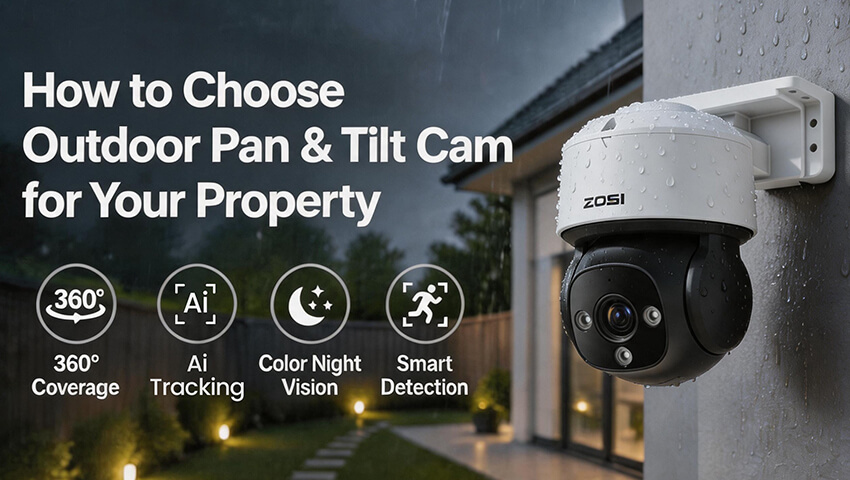
When it comes to securing your property, a reliable surveillance system is essential. One of the most powerful tools in modern security is the PTZ (Pan-Tilt-Zoom) camera. These cameras are designed to provide expansive coverage and enhanced control, making them ideal for monitoring large areas. Whether you’re safeguarding a home, business, or expansive property, a PTZ camera can help ensure no corner is left unmonitored.
In this guide, we’ll walk you through the key factors you need to consider when choosing an outdoor PTZ camera for your property. From understanding the camera’s features to selecting the best model based on your specific needs, we’ve got you covered.
Contents
Understanding What PTZ Cameras Offer
Before diving into the specifics of choosing the right PTZ camera, let’s take a moment to understand what makes these cameras stand out from other surveillance options.
1. Pan & Tilt Features
A PTZ camera is named for its ability to Pan, Tilt, and Zoom, offering far more flexibility than a traditional fixed camera. The Pan function allows the camera to rotate horizontally (left to right), covering a wide area. The Tilt function provides vertical movement (up and down), enabling the camera to monitor different levels or angles. This dynamic movement allows PTZ cameras to provide a much broader coverage area compared to stationary models.
2. Zoom Functionality
One of the key advantages of a PTZ camera is its Zoom feature. PTZ cameras typically offer optical zoom (as opposed to digital zoom) that enables you to zoom in on a subject without losing image quality. This is perfect for situations where you need to focus on distant objects or individuals while maintaining clear, sharp images.
3. 360° Coverage
Many PTZ cameras can rotate a full 360°, offering complete coverage of your surroundings. This eliminates blind spots and ensures no area of your property is left unmonitored. The ability to rotate continuously also allows you to track moving objects, which is especially useful for monitoring large properties.
4. Motion Detection & Auto-Tracking
Modern PTZ cameras often come equipped with motion detection and auto-tracking features. The camera can automatically detect movement in its field of view and adjust its position to track the object. This feature is particularly useful in reducing the need for manual camera adjustments, as the camera can follow people, vehicles, or animals around your property.
Key Features to Look for in an Outdoor PTZ Camera
When choosing a PTZ camera for your property, there are several important features you should consider to ensure it meets your needs.
Image Quality (Resolution)
The resolution of the camera directly impacts the clarity and detail of the footage it captures. 4K resolution is becoming the standard for high-quality surveillance systems, offering four times the resolution of 1080p HD. Higher resolution cameras can capture more detail, which is especially useful when zooming in on distant objects or trying to identify individuals.
Look for cameras that offer at least 1080p HD resolution if you’re on a budget, but for the clearest footage, 4K resolution is ideal, particularly if your property covers large areas.
Night Vision & Infrared (IR) Range
Outdoor cameras need to be effective in low-light conditions. PTZ cameras typically come with infrared (IR) capabilities, which allow them to capture clear footage in complete darkness. The IR range determines how far the camera can see at night.
If you’re monitoring a large property, you’ll want to choose a camera with an extended IR range, ensuring it can capture clear footage even in the farthest corners of your property at night.
Weather Resistance (IP Rating)
Outdoor cameras must be able to withstand various weather conditions. This is where the IP (Ingress Protection) rating comes into play. The IP rating indicates how well the camera is sealed against dust and water.
For outdoor PTZ cameras, an IP66 or IP67 rating is ideal, as these ratings indicate that the camera is fully protected against dust and can withstand powerful jets of water. This ensures the camera can continue functioning even during rainstorms or in dusty environments.
Field of View (FOV)
The Field of View (FOV) refers to the area that the camera can cover at once. For a PTZ camera, the FOV will depend on the zoom level and lens. A wider FOV allows the camera to cover more area without needing to move, while a narrower FOV might be suitable for focusing on specific areas.
When considering the FOV, balance between having a wide coverage area and the ability to zoom in on objects. A horizontal FOV of around 90° to 120° is typical for outdoor PTZ cameras.
Pan and Tilt Angles
The pan (horizontal rotation) and tilt (vertical movement) angles are essential for determining how much area the camera can cover. A good PTZ camera should have at least 355° of horizontal pan and 90° of tilt. This allows the camera to cover a wide area while being able to focus on both high and low points on your property.
Zoom Capabilities
Zooming in on a subject is one of the primary reasons people opt for PTZ cameras. Ensure the camera has optical zoom rather than digital zoom for better quality. A 4x to 20x optical zoom is typically sufficient for most residential and commercial properties, allowing you to focus on distant objects without losing image quality.
Security Features
Beyond basic image quality and durability, there are additional security features to look for in a PTZ camera.
Motion Detection and Alerts
Motion detection is a vital feature for security cameras. It allows the camera to alert you when there is movement in its field of view, enabling you to respond to security threats in real-time. Many PTZ cameras offer customizable motion detection zones, so you can set up alerts for specific areas of your property that require monitoring.
Remote Control Access
One of the greatest advantages of PTZ cameras is the ability to control them remotely. You can pan, tilt, and zoom the camera from anywhere using a smartphone or computer. This flexibility is essential if you need to adjust the camera’s angle or zoom level to focus on different areas at different times of day.
Two-Way Audio
Some PTZ cameras come with two-way audio, which allows you to listen to and communicate with people on your property through the camera. This feature can be useful if you want to communicate with a visitor or deter intruders by speaking to them through the camera.
Cloud Storage vs. Local Storage
When it comes to storing footage, there are two main options: cloud storage and local storage (SD cards or hard drives). Cloud storage offers off-site backup and remote access to footage, while local storage provides immediate access to footage and is not dependent on an internet connection.
Consider your budget and security needs when choosing between the two options. Some cameras offer hybrid solutions, where you can use both local and cloud storage, giving you added flexibility.
Consider Your Property’s Layout
The layout of your property plays a crucial role in determining which PTZ camera is best for you.
Determining Coverage Area
Start by identifying the areas of your property that need to be monitored. For example, do you need coverage for a large backyard, a driveway, or the perimeter of your home? Understanding the size and layout of the area will help you choose a camera with the appropriate pan and tilt range.
Camera Placement Tips
Proper camera placement is key to maximizing coverage. For PTZ cameras, mounting them at higher points (such as the corner of a building or under the eaves of your roof) allows the camera to monitor a wider area. Ensure the camera’s field of view isn’t obstructed by trees, walls, or other structures.
Obstacles and Line of Sight
When installing a PTZ camera, ensure that its line of sight is unobstructed. Trees, large structures, and even vehicles can interfere with the camera’s movement and range. Avoid placing the camera near objects that could block its view or cause it to lose its ability to track moving targets.
Integration with Smart Home or Security Systems
In today’s connected world, many security cameras integrate seamlessly with smart home systems. PTZ cameras can often be connected to systems like Google Home, Amazon Alexa, or other smart devices, allowing you to control your camera through voice commands or an app.
Compatibility with Other Devices
Ensure the PTZ camera you choose is compatible with your existing security setup, including alarms, motion sensors, and lights. Integration with other devices will provide enhanced security and allow you to automate certain tasks, such as turning on lights when motion is detected.
App and Software Control
Most modern PTZ cameras come with smartphone apps that let you control the camera remotely. These apps allow you to pan, tilt, and zoom, as well as view live footage and review recorded videos. Make sure the camera’s app is user-friendly and has the features you need.
Cloud Service Subscription
Some PTZ cameras require a subscription to a cloud service for remote storage and access to recordings. Ensure you understand the costs involved and whether the service provides adequate storage for your needs. Some cameras offer free cloud storage for a limited amount of footage, while others require a paid subscription.
Maintenance and Durability
When investing in an outdoor PTZ camera, it’s important to think about long-term durability and maintenance.
Weatherproofing and Longevity
Since PTZ cameras are designed for outdoor use, they must be able to withstand the elements. Choose a camera made from high-quality materials that offer robust weatherproofing. Look for cameras with a high IP rating (IP66 or IP67) for maximum durability.
Cleaning & Maintenance Tips
To ensure the camera continues to function properly, clean the lens regularly to remove dirt, dust, or debris. If your camera has moving parts, such as motors for pan and tilt, make sure they are free from obstruction. Regular maintenance can extend the lifespan of your camera and keep it performing at its best.
Budget Considerations
Finally, consider your budget when choosing a PTZ camera. While these cameras offer advanced features, they come at different price points depending on their quality and functionality.
Price Range
Expect to pay more for higher-resolution cameras, longer zoom ranges, and advanced features. Entry-level PTZ cameras might start at around $150–$200, while more advanced models can exceed $1,000, depending on the brand and features.
Cost of Additional Features
Keep in mind that features like 4K resolution, advanced zoom, or cloud storage may increase the cost. Be sure to evaluate the long-term value of these features against your security needs and budget.
Long-term Value
While you may find cheaper options, investing in a higher-end PTZ camera can provide better performance, longevity, and peace of mind. Consider the overall value a camera will provide in protecting your property and assets over time.
Conclusion
Choosing the right outdoor PTZ camera for your property is a decision that requires careful consideration of several factors. From the camera’s resolution and zoom capabilities to its durability and integration with your existing security system, every feature plays a role in ensuring that your property remains secure.
By understanding your specific needs and evaluating the options available, you can select the best PTZ camera to provide comprehensive coverage, enhance your security, and give you peace of mind knowing that your property is always being monitored.