When choosing a security camera, you may come across terms such as 2K, 4K, night vision, AI detection, and HDR. While resolution is often one of the first specifications people look at, image quality depends on much more than the number of pixels. One important technology that can make a significant difference is HDR, or High Dynamic Range.
Security cameras are often installed in challenging environments where lighting changes constantly. A camera may face a bright window, a dark driveway, a shaded doorway, or a scene illuminated by headlights. Without the right image-processing technology, important details can easily become too dark, too bright, or completely washed out.
HDR is designed to help security cameras handle these difficult lighting conditions. But what exactly is HDR, how does it work, and why does it matter for home security?
Let’s take a closer look.
Contents
What Is HDR on a Security Camera?
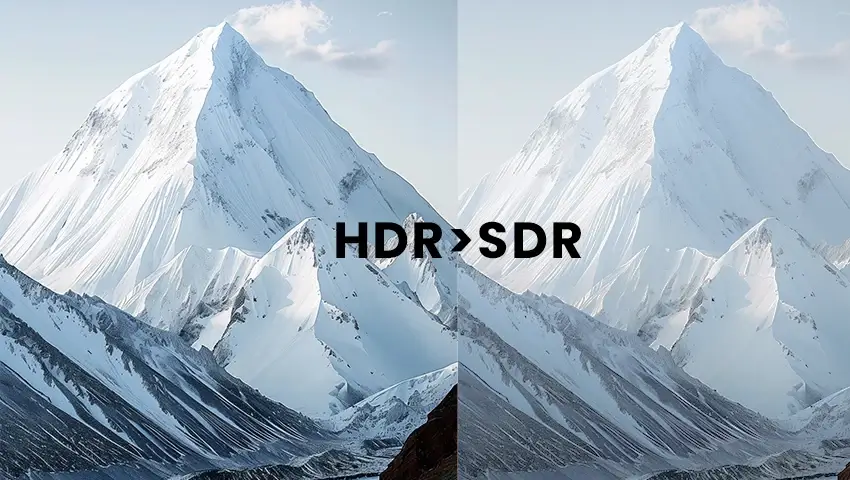
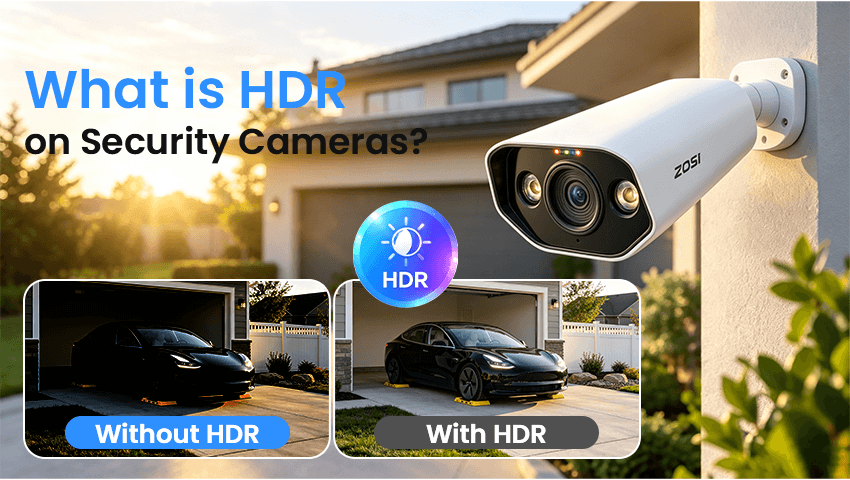
HDR stands for High Dynamic Range. In simple terms, HDR technology helps a security camera capture and reproduce details in both very bright and very dark areas of the same scene.
A normal camera can struggle when a scene contains extreme differences in brightness. For example, imagine a security camera installed inside a house and pointed toward a sunny front door. The outdoor area may be extremely bright while the indoor area is relatively dark.
Without HDR, the camera may adjust its exposure for one part of the scene. If it exposes for the bright outdoor area, the inside of the house can appear almost completely black. If it exposes for the darker area, the bright doorway or window may become overexposed and lose important details.
HDR helps balance these differences so that more information can remain visible across the entire image.
How Does HDR Work on Security Cameras?
HDR can be achieved through different technologies and image-processing methods, depending on the camera design.
One common approach is to capture multiple exposures of the same scene. The camera can combine information from brighter and darker exposures to create a final image with a wider range of visible details.
For example, one exposure can preserve details in bright areas, while another can capture information from darker areas. The camera’s image processor then combines the useful information into a single frame.
Some security cameras also use technologies such as WDR (Wide Dynamic Range) to achieve a similar goal. Although HDR and WDR are related to dynamic-range performance, they are not necessarily identical technologies. Their implementation can vary between camera manufacturers.
The key idea is the same: maintain useful image details when a scene contains both very bright and very dark areas.
Why Does HDR Matter for Security Cameras?
HDR is particularly useful because security cameras are not always recording under ideal lighting conditions. A camera might need to identify a person, vehicle, package, or other object when sunlight, shadows, or artificial lighting create difficult exposure conditions.
Here are several reasons HDR can matter.
1. Better Detail in High-Contrast Scenes
One of the biggest advantages of HDR is its ability to improve visibility in scenes with strong contrast.
Consider a front door camera facing outside. During the daytime, direct sunlight can make the area outside much brighter than the interior of the house. Without sufficient dynamic range, people standing near the doorway may appear as dark silhouettes.
HDR can help preserve more details in both the brighter and darker portions of the image.
This can make recorded footage easier to review and potentially more useful when you need to identify what happened.
2. Improved Image Quality Around Windows and Doors
Windows and glass doors are common problem areas for security cameras.
If a camera is installed indoors and pointed toward a window, bright outdoor light can cause the camera to overexpose the outside scene. The result may be a nearly white image where outdoor details are difficult to see.
HDR can help the camera better balance the indoor and outdoor portions of the scene.
This is especially useful for cameras monitoring entrances, patios, balconies, garages, and other areas where indoor and outdoor lighting meet.
3. Clearer Images in Changing Lighting Conditions
Lighting can change quickly throughout the day.
A driveway may look completely different in the morning, afternoon, and evening. Clouds can also cause sudden changes in brightness. At night, vehicle headlights can create another challenging situation.
A camera with good dynamic-range performance can adapt more effectively to these changes and maintain a more balanced image.
This doesn’t mean HDR can solve every lighting problem, but it can provide an important advantage in difficult scenes.
4. More Useful Footage for Security Monitoring
The primary purpose of a security camera is to provide useful visual information.
A high-resolution camera can capture a large number of pixels, but resolution alone does not guarantee that every part of the image will be clearly visible.
For example, a 4K camera may technically provide very high resolution, but if a person’s face is heavily shadowed or a background is completely overexposed, some details may still be difficult to recognize.
HDR works alongside resolution and other image technologies to help produce more balanced footage.
HDR vs. Standard Security Camera Images
The difference between HDR and standard imaging is easiest to understand through a high-contrast example.
Imagine a person standing outside a house with bright sunlight behind them.
A camera with limited dynamic range may expose for the bright background. The person could then appear very dark, making facial or clothing details difficult to see.
A camera with better HDR performance can preserve more information in the bright background while also retaining details on the person.
This is why HDR can be especially valuable for security cameras installed near windows, entrances, garages, driveways, and other high-contrast areas.
HDR vs. Night Vision: Are They the Same?
No. HDR and night vision solve different problems.
HDR is primarily designed to manage differences between bright and dark areas within a scene.
Night vision, on the other hand, is designed to help a camera capture usable images when there is little or no visible light.
Many modern security cameras combine multiple imaging technologies. For example, a camera may offer HDR during challenging daytime conditions and infrared or full-color night vision after dark.
These technologies can complement each other, but they should not be considered interchangeable.
HDR and 2K or 4K Resolution
HDR also does not replace resolution.
Resolution determines how much visual information a camera can capture in terms of pixels. Higher resolutions such as 2K and 4K can provide more image detail, particularly when viewing or zooming into footage.
HDR focuses on dynamic range, or how well the camera handles differences between light and dark areas.
A good security camera should therefore be evaluated using multiple specifications rather than resolution alone.
When comparing cameras, consider:
· Resolution
· HDR or WDR performance
· Night vision
· Image sensor quality
· Lens and field of view
· Frame rate
· Motion detection
· AI detection capabilities
· Storage options
· Weather resistance
· Connectivity and app features
Together, these features determine how useful the camera will be in real-world situations.
Where Is HDR Most Useful?
HDR can be particularly valuable in several security camera applications.
Front Door Cameras
A front door can have significant differences between indoor and outdoor lighting. HDR can help maintain details when the camera faces a bright entrance.
Driveway Security Cameras
Driveways may experience direct sunlight during the day and vehicle headlights at night. HDR can help manage these high-contrast conditions.
Garage Cameras
Garages can be relatively dark compared with the outdoor area around the entrance. HDR can help balance these differences.
Indoor Cameras Facing Windows
When an indoor camera points toward a bright window, HDR can help prevent the outdoor area from becoming completely overexposed.
Outdoor Cameras
Outdoor environments naturally contain strong lighting changes caused by sunlight, shadows, clouds, and artificial lights. HDR can help maintain more balanced images throughout the day.
Does Every Security Camera Need HDR?
Not necessarily.
HDR is most useful when a camera regularly encounters scenes with strong differences in brightness. If a camera is installed in a relatively evenly lit room, HDR may be less important.
However, for cameras monitoring entrances, windows, driveways, or outdoor areas, dynamic-range performance can be an important consideration.
Instead of asking whether HDR is universally necessary, consider the camera’s installation location and lighting conditions.
FAQs
1. What does HDR mean on a security camera?
HDR stands for High Dynamic Range. It helps a security camera capture more balanced details in scenes containing both bright and dark areas.
2. Is HDR better than 4K?
HDR and 4K serve different purposes. 4K refers to image resolution, while HDR refers to dynamic-range performance. A camera can benefit from having both.
3. Does HDR improve night vision?
HDR is not the same as night vision. HDR mainly helps with challenging differences between bright and dark areas, while night vision helps cameras capture images in low-light or dark environments.
4. Is HDR important for cameras facing windows?
Yes. Cameras facing bright windows can experience overexposure. HDR can help preserve more details in both the darker indoor area and the brighter outdoor area.
Conclusion
HDR is an important imaging technology that can make security camera footage more useful in challenging lighting conditions. By helping balance bright and dark areas, HDR can preserve details that might otherwise be lost to shadows or overexposure.
However, HDR is only one part of a security camera’s overall performance. Resolution, night vision, image sensors, motion detection, storage, connectivity, and installation location all play important roles in determining image quality.
When choosing a security camera, don’t simply look for the highest resolution or the longest feature list. Think about where the camera will be installed and the lighting conditions it will encounter.
For areas such as front doors, windows, driveways, garages, and outdoor spaces, a camera with strong dynamic-range performance can help provide clearer, more balanced footage when you need it most.