Camera movement plays a critical role in how we perceive and interpret visual information. Among all camera motions, camera pan is one of the most fundamental and widely used techniques in both professional video production and modern imaging systems. Despite its simplicity, it has a powerful impact on storytelling, scene coverage, and spatial awareness.
This guide explains what camera pan is, how it works, how it differs from other movements, and why it remains essential in today’s visual world.
Contents
What Is Camera Pan?
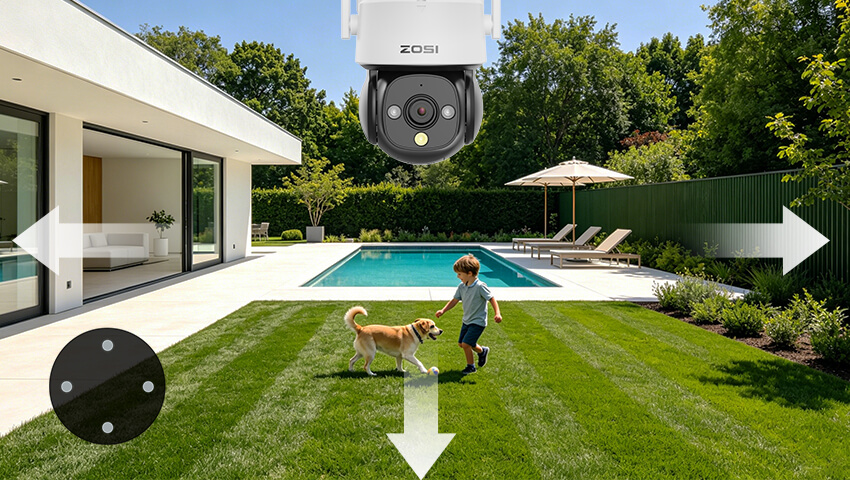
A camera pan refers to the horizontal movement of a camera while its base remains in a fixed position. In simple terms, the camera rotates left or right without physically changing location.
Think of it like turning your head from side to side while standing in one spot. Your body doesn’t move, but your field of view changes. That is exactly how a camera pan works.
This movement is commonly used to:
– Follow a moving subject
– Reveal more of a scene
– Connect different visual elements in one continuous shot
Unlike zooming, which changes magnification, panning changes the viewing direction while maintaining the same focal length and position.
How Camera Pan Works Behind the Scenes
At a technical level, camera panning relies on rotation around a fixed vertical axis. The camera is mounted on a stable base or motorized mechanism that allows controlled horizontal movement.
There are two main ways this movement is achieved:
1. Manual Control (Traditional Filming)
In film production, camera operators often use tripods or stabilization systems with fluid heads. These allow smooth left-to-right movement by physically guiding the camera.
The goal is to maintain consistency in speed and avoid sudden jerks that could disrupt the viewing experience.
2. Motorized or Automated Control
In modern imaging systems, especially surveillance and smart devices, panning is often controlled electronically.
Internal motors rotate the camera based on user input or automated tracking systems. These systems may:
– Follow detected motion
– Sweep across a predefined area
– Respond to remote control commands
Regardless of method, the principle remains the same: the camera rotates horizontally without changing position.
The Visual Effect of Camera Panning
Camera panning is more than a mechanical movement—it directly affects how viewers understand space and motion.
1. Expanding Spatial Awareness
A fixed camera captures only one direction at a time. Panning allows the viewer to experience a wider environment without needing multiple cameras or cuts.
This creates a sense of continuity across space, making scenes feel more complete and immersive.
2. Creating Natural Motion Perception
Human vision naturally moves horizontally when scanning environments. Because of this, panning feels intuitive and comfortable to watch.
It helps the viewer follow movement in a way that feels realistic and unforced.
3. Enhancing Storytelling
In video production, panning is often used to reveal relationships between objects or subjects in a scene.
For example, a slow pan might show:
– A person entering a room
– The environment they are interacting with
– Important details that appear gradually within the frame
This builds context without needing cuts or edits.
Camera Pan vs Other Camera Movements
To fully understand camera pan, it helps to compare it with other common camera motions.
Camera Pan vs Tilt
– Pan: Horizontal movement (left or right)
– Tilt: Vertical movement (up or down)
While panning scans across a scene, tilting shifts attention between different height levels. Together, they allow full 3D spatial coverage from a single fixed position.
Camera Pan vs Zoom
Zooming changes the scale of the image, not the direction.
– Pan changes where you are looking
– Zoom changes how close you are to the subject
A zoom brings objects closer visually, while a pan reveals new areas of the environment.
Camera Pan vs Physical Camera Movement
Some techniques involve moving the entire camera setup, such as tracking shots or dolly movements.
– Pan: Rotation in place
– Tracking/Dolly: Physical movement through space
Tracking shots change perspective depth, while panning maintains a constant viewpoint location.
Where Camera Panning Is Commonly Used
Camera panning is widely used across different industries and content formats.
1. Video Production
In filmmaking and content creation, panning helps:
– Follow action scenes
– Capture landscapes
– Transition between subjects within a scene
It is often used to create smooth visual flow without hard cuts.
2. Surveillance and Security Systems
In monitoring environments, panning allows a single camera to observe a broader area.
Instead of installing multiple fixed viewpoints, a panning camera can scan:
– Driveways
– Backyards
– Entry points
– Large indoor spaces
3. Live Broadcasting and Events
In sports or live events, panning helps camera operators track movement across large fields or stages, ensuring viewers don’t miss key actions.
4. Industrial and Environmental Monitoring
In professional monitoring systems, panning supports observation of:
– Construction sites
– Warehouses
– Outdoor facilities
It allows continuous scanning without repositioning equipment.
This makes it efficient for broad coverage and situational awareness.
Benefits of Camera Panning
Camera panning offers several important advantages:
1. Wider Coverage from a Single Position
A single camera can capture a much larger area, reducing the need for multiple fixed units.
2. Better Motion Tracking
Panning makes it easier to follow subjects moving horizontally across a scene.
3. Improved Context
Instead of showing isolated moments, panning connects visual elements into a continuous story.
4. More Natural Viewing Experience
Because it aligns with natural human eye movement, panning feels intuitive and easy to follow.
Limitations of Camera Panning
Despite its usefulness, camera panning has some limitations:
1. Limited Vertical Coverage
Panning only moves horizontally, so it cannot capture vertical changes without tilting.
2. Potential Motion Discomfort
Fast or excessive panning can make footage difficult to follow or visually uncomfortable.
3. Blind Spots Still Exist
Although coverage improves, a single camera still cannot fully eliminate blind areas in complex environments.
4. Dependence on Control Quality
Smoothness depends heavily on how well the movement is controlled, whether manually or automatically.
Best Practices for Effective Camera Panning
To use panning effectively, it’s important to focus on control and intention.
1. Keep Movements Smooth and Consistent
Avoid sudden or jerky motion. A steady speed helps viewers stay oriented.
2. Pan With Purpose
Every movement should have a reason—such as following action or revealing new information.
3. Combine with Other Movements
Panning works best when paired with tilting or zooming to create full spatial understanding.
4. Avoid Overuse
Too much panning can distract viewers. Use it only when it adds value to the scene.
What Is a Telephoto Lens? A Complete Guide for Beginners and Creators
Conclusion
Camera pan may be one of the simplest camera movements, but its impact is significant. By rotating horizontally from a fixed position, it allows cameras to explore space, follow motion, and build visual context in a natural way.
From filmmaking to modern surveillance systems, panning remains a core technique for capturing and understanding visual environments. It bridges the gap between static observation and dynamic storytelling, making it an essential tool in both creative and technical applications.
As imaging technology continues to evolve, camera pan will remain a foundational element of how we capture and interpret the world visually.
Related Security Guides
- Understanding Camera Angles: Maximizing Your Security Camera Coverage
- How to Install Security Cameras in a Garage for the Best Coverage
- Wide Angle vs Telephoto Lens: Which Lens Should You Choose?
- What Is a Telephoto Lens? A Complete Guide for Beginners and Creators
- How to Plan Wiring for a Home Surveillance System: A Beginner’s Guide