If you’ve ever admired photos where a distant mountain looks incredibly close, or a bird appears large and detailed even though it’s far away, you’ve likely seen the magic of a telephoto lens. These lenses are a favorite among wildlife photographers, sports shooters, and even portrait creators. But what exactly makes a telephoto lens special—and how do you choose the right one?
This guide will walk you through everything you need to know.
Contents
1. What Is a Telephoto Lens?
A telephoto lens is a type of camera lens with a long focal length, typically 70mm and above, that allows you to capture subjects from far away while still filling the frame.
In simple terms: it makes faraway subjects look closer.
Common Telephoto Lens Ranges
Short telephoto:70–135mm
Great for portraits and street photography.
Medium telephoto: 135–300mm
Ideal for wildlife and sports.
Super telephoto: 300mm and above
Used for birds, safaris, and long-distance action.
2. How Telephoto Lenses Work
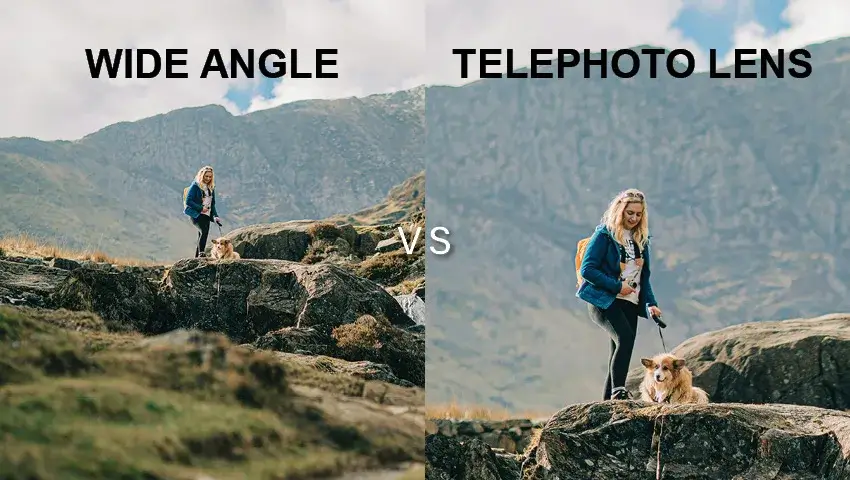
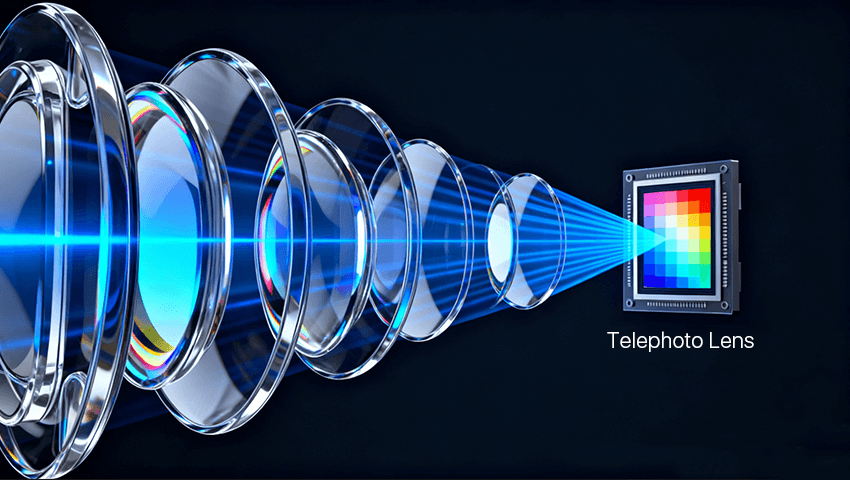
Telephoto lenses use a combination of optical elements to compress distance, magnify far-off objects, and narrow your field of view.
This creates a unique perspective where background objects appear larger and closer to your subject—perfect for dramatic images.
3. Key Benefits of Telephoto Lenses
1. Capture Distant Subjects
Animals, athletes, airplanes—you can shoot all of them without physically getting close.
2. Beautiful Background Blur (Bokeh)
Long focal lengths naturally create a shallow depth of field, ideal for clean, soft backgrounds.
3. Flattering Portrait Compression
Telephotos avoid wide-angle distortion, making faces look more natural and flattering.
4. Safe & Ethical Shooting
For wildlife, keeping distance is essential both for safety and to avoid disturbing animals.
4. When Should You Use a Telephoto Lens?
Wildlife photography – Birds, deer, safari animals
Sports events – Football, tennis, racing
Portrait photography – Stunning headshots with smooth blur
Events – Concerts, ceremonies
Travel – Capturing architecture or landscapes from afar
Even landscapes benefit—telephotos can isolate mountains, trees, or layers of scenery for a unique look.
5. Challenges You Should Know About
No gear is perfect, and telephoto lenses come with a few considerations:
Heavier weight – Longer glass = more weight
Higher cost – Super telephotos are expensive
Camera shake – Requires faster shutter speeds or image stabilization
Narrow field of view – Easier to miss fast-moving subjects without practice
6. Tips for Getting the Best Results
Use faster shutter speeds
A simple rule:
Shutter speed ≥ 1 / focal length
Example: Shooting at 300mm? Use at least 1/300s.
Consider a monopod or tripod
Helps stabilize long lenses during long sessions.
Practice tracking subjects
Perfect for birds-in-flight or sports.
Learn your lens’s “sweet spot”
Some telephotos perform best around f/5.6–f/8.
7. Recommended Telephoto Lenses (General Guide)
70-200mm f/2.8 – The most versatile telephoto for portraits, events, and sports
100-400mm – Excellent for wildlife and travel
150-600mm – For birders or distant action
300mm / 400mm / 600mm primes – For professionals needing the sharpest results
(Choose based on your camera brand: Canon, Nikon, Sony, Fujifilm, etc.)
Final Thoughts
A telephoto lens opens up creative possibilities that simply aren’t possible with standard or wide-angle lenses. Whether you’re capturing wildlife from a safe distance, freezing athletes mid-action, or creating dreamy portrait backgrounds, a telephoto may become one of your most-used lenses.
If you’re thinking of expanding your kit, a telephoto lens is one of the best investments a photographer can make.
Related Posts