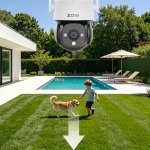
Security cameras have become an essential part of modern home and business security. Among the many types of surveillance cameras available today, PTZ cameras stand out for their ability to move, rotate, and zoom, providing a wider and more flexible field of view than traditional fixed security cameras.
But what exactly is a PTZ camera, how does it work, and when should you consider using one?
In this guide, we’ll explain everything you need to know about PTZ security cameras, including their key features, benefits, common applications, and how they compare with fixed security cameras.
Contents
What Is a PTZ Camera?
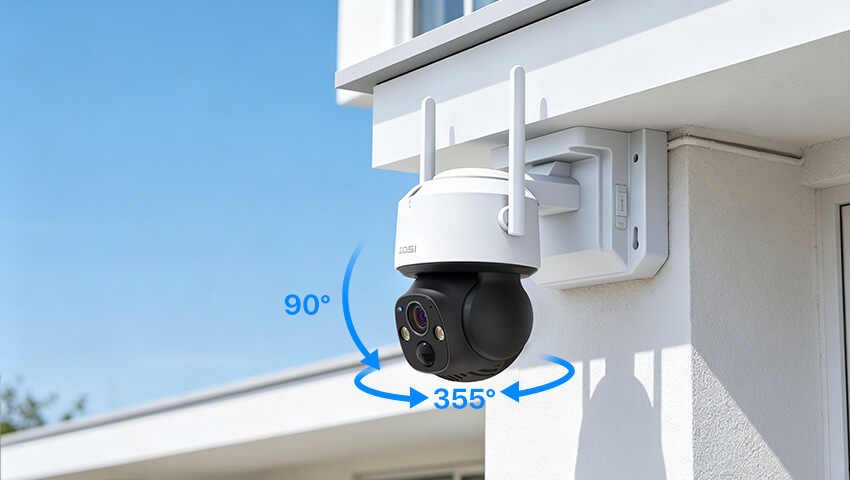
PTZ stands for Pan, Tilt, and Zoom.
Unlike a traditional fixed security camera that monitors a specific area from a fixed position, a PTZ camera can move horizontally, vertically, and zoom in or out to monitor different areas.
The three main functions are:
· Pan: The camera can rotate horizontally from left to right.
· Tilt: The camera can move vertically up and down.
· Zoom: The camera can zoom in on distant objects or areas for more detailed viewing.
By combining these three functions, a PTZ security camera can cover a much larger area and allow users to adjust the viewing angle remotely.
How Does a PTZ Security Camera Work?
A PTZ camera uses built-in motors and mechanical or electronic controls to change its viewing direction.
Users can typically control the camera through a mobile app, computer, NVR, or other surveillance system. Depending on the model, users may be able to manually adjust the camera or configure automatic movements.
For example, if you notice something unusual in your backyard, you can remotely rotate the camera toward the area and zoom in to get a closer look.
Some advanced PTZ cameras can also automatically track moving objects, helping users monitor activity more efficiently.
Key Features of PTZ Cameras
1. Wide-Area Coverage
One of the biggest advantages of PTZ cameras is their ability to monitor a wide area.
Instead of installing multiple fixed cameras to cover different directions, a single PTZ camera can move between different viewing angles.
This makes PTZ cameras particularly useful for large outdoor areas, parking lots, warehouses, commercial properties, and other locations where broad coverage is important.
2. Remote Pan and Tilt Control
With remote control capabilities, users can adjust the camera’s viewing angle from almost anywhere.
Through a smartphone app, you may be able to move the camera left, right, up, or down without physically touching the device.
This can be especially useful when monitoring a large property or checking different areas of your home while you’re away.
3. Optical or Digital Zoom
Zoom allows users to see more detail in areas that are farther away.
Depending on the camera model, zoom may be optical, digital, or a combination of both.
Optical zoom generally provides better image quality when zooming in because the camera physically adjusts its lens rather than simply enlarging the image digitally.
4. Motion Tracking
Advanced PTZ cameras may include intelligent motion detection and automatic tracking.
When the camera detects movement, it can potentially follow the moving subject within its viewing range.
Depending on the model, AI-powered detection may also help distinguish people, vehicles, or other objects from general movement.
PTZ Camera vs. Fixed Security Camera
The main difference between PTZ and fixed security cameras is their ability to move.
A fixed security camera continuously monitors the same area. It is generally simple to install and is well suited for monitoring a specific entrance, hallway, room, driveway, or other defined location.
A PTZ camera, on the other hand, can change its viewing direction and zoom in on areas of interest.
Neither type is necessarily better for every situation. The right choice depends on the size of the area, installation location, security requirements, and budget.
Where Are PTZ Security Cameras Commonly Used?
PTZ cameras are widely used in both residential and commercial security applications.
· Homes and Large Properties
For homeowners with large yards, driveways, gardens, or multiple outdoor areas, a PTZ camera can provide flexible monitoring from a single location.
Users can remotely adjust the camera to check different areas of their property without needing to install a separate camera for every viewing direction.
· Parking Lots
Parking lots often require surveillance across a large area. PTZ cameras can rotate between different sections and zoom in when suspicious activity occurs.
Security personnel can use the camera to focus on vehicles, entrances, pedestrians, or other areas that require closer attention.
· Warehouses and Industrial Facilities
Large warehouses may have multiple entrances, storage areas, and working zones. A PTZ camera can help security personnel monitor different areas from a centralized position.
The ability to remotely change the viewing direction can be particularly useful when the camera is installed in a large open space.
· Commercial Buildings
Businesses can use PTZ cameras to monitor entrances, outdoor areas, parking spaces, and other important locations.
A PTZ camera can provide flexible coverage while allowing users to remotely check areas where activity is detected.
· Schools and Public Areas
PTZ surveillance cameras can also be useful for monitoring large outdoor spaces such as school grounds, campuses, parks, and other public areas.
Their wide movement range allows security teams to monitor different sections of a property from one camera location.
What Are the Advantages of PTZ Cameras?
PTZ cameras offer several important benefits for surveillance systems.
· Flexible viewing: The camera can monitor different directions instead of being limited to one fixed angle.
· Large coverage area: One PTZ camera can potentially cover a much wider area than a fixed camera.
· Remote control: Users can change the viewing angle remotely through compatible devices.
· Detailed monitoring: Zoom capabilities allow users to examine objects or activity farther away.
· Intelligent features: Some models combine PTZ movement with motion detection, human detection, vehicle detection, and automatic tracking.
What Are the Limitations of PTZ Cameras?
Despite their advantages, PTZ cameras are not suitable for every situation.
Because the camera moves between different areas, it may not continuously record every direction at the same time. If constant coverage of multiple fixed areas is required, multiple fixed cameras may be a better solution.
PTZ cameras can also be more complex than basic fixed cameras because they contain moving components and may require additional configuration.
For this reason, it is important to consider the surveillance area and security goals before choosing a PTZ camera.
How to Choose the Right PTZ Security Camera
When choosing a PTZ security camera, consider the following factors:
- Resolution
Higher resolution can provide clearer images and more visible details, particularly when monitoring larger areas.
For outdoor surveillance, a high-resolution camera can make it easier to identify people, vehicles, and other important details.
- Zoom Capability
Consider how far away the subjects you want to monitor are. If you need to identify details at a distance, a camera with stronger optical zoom may be beneficial.
Optical zoom is generally preferable when detailed long-distance monitoring is important.
- Pan and Tilt Range
Check how far the camera can rotate horizontally and vertically. A wider movement range generally provides greater coverage.
Before installation, consider the camera’s mounting position and make sure its movement range covers the areas you want to monitor.
- Night Vision
For 24/7 surveillance, night vision is an important feature.
Depending on the model, night vision may use infrared technology or full-color imaging. A camera with reliable nighttime performance can help maintain visibility even in low-light conditions.
- Motion Detection and AI Features
Smart detection features can help reduce unnecessary alerts and make it easier to identify relevant activity.
Some security cameras can distinguish between different types of objects, such as people and vehicles, and send alerts when specific activity is detected.
- Weather Resistance
For outdoor installation, look for a camera designed to withstand rain, dust, temperature changes, and other environmental conditions.
A weather-resistant design can help ensure reliable performance in different outdoor environments.
- Remote Access
A mobile app can make it easier to view live footage, receive alerts, adjust the camera, and manage security settings remotely.
Remote access is particularly useful for homeowners and business owners who want to monitor their property while away.
PTZ Camera vs. Other Types of Security Cameras
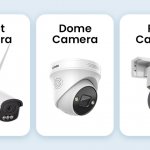
PTZ cameras are just one type of surveillance camera. Depending on your security needs, you may also consider fixed cameras, dome cameras, bullet cameras, or indoor security cameras.
A fixed security camera is ideal when you need continuous monitoring of one specific area.
A PTZ camera is better suited to larger areas where the viewing direction needs to change.
A dome camera is commonly used for indoor and commercial surveillance because of its discreet design and wide viewing angle.
A bullet camera is often used for outdoor monitoring and provides a more visible deterrent.
In many security systems, different types of cameras can be used together to provide more complete coverage.
Is a PTZ Camera Right for Your Security Needs?
A PTZ camera can be an excellent choice when you need to monitor a large or changing area and want the flexibility to remotely adjust the camera’s viewing direction.
For a small room, hallway, or entrance where one fixed viewing angle is sufficient, a traditional fixed security camera may be more practical.
For larger properties, parking areas, warehouses, commercial buildings, and outdoor spaces, PTZ technology can provide greater flexibility and coverage.
Before purchasing a PTZ camera, consider the size of the area, the distance you need to monitor, lighting conditions, desired image quality, and whether you need remote control or intelligent detection features.
Conclusion
So, what is a PTZ camera?
A PTZ camera is a security camera equipped with Pan, Tilt, and Zoom capabilities. By allowing users to remotely change the viewing direction and zoom in on areas of interest, PTZ cameras provide flexible surveillance for a wide range of residential and commercial applications.
When choosing a security camera, the most important thing is not simply selecting the camera with the most features. Instead, consider your property’s size, viewing area, lighting conditions, security goals, and installation environment.
Whether you choose a PTZ camera, a fixed security camera, or a combination of both, the right surveillance system can provide better visibility and help create a more effective security strategy.