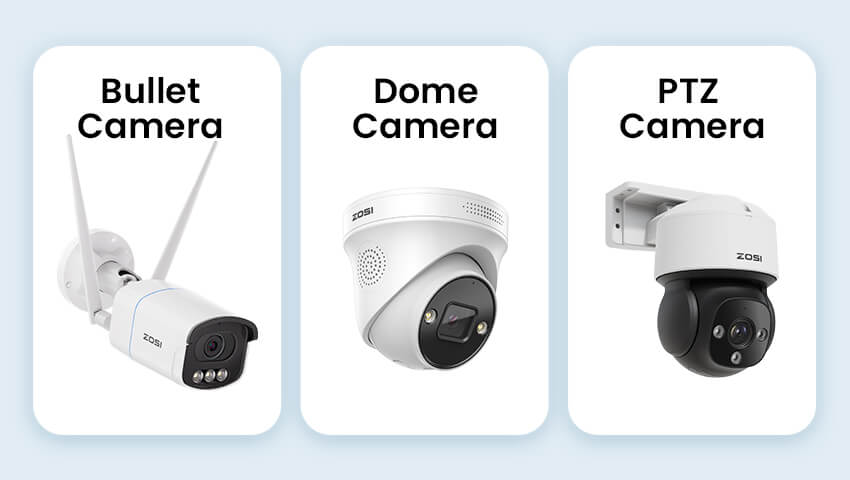
Choosing a security camera for your home can feel overwhelming. With so many camera designs, features, and installation options available, many homeowners are unsure which type is the right fit for their property.
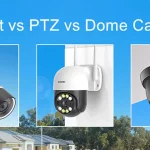
Should you choose a bullet security camera for outdoor monitoring? Is a dome camera better for discreet protection? Do you need a PTZ camera for wider coverage?
The answer depends on more than just the camera’s appearance. Different security camera types are designed for different environments, viewing needs, and protection goals.
A camera that works well for monitoring a driveway may not be the best choice for a front entrance or backyard. Understanding the differences between bullet, dome, and PTZ security cameras can help you build a more effective security system and avoid choosing a camera that does not match your needs.
In this guide, we will explain how these three common security camera types work, where they are best used, and how to choose the right option for your home.
Contents
Understanding the Three Main Security Camera Types
1. What Is a Bullet Security Camera?
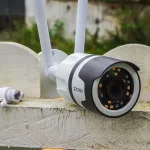
A bullet security camera is one of the most recognizable types of security cameras. It features a long, cylindrical design that typically points toward a specific monitoring area.
Because of its shape, bullet cameras are often installed in locations where long-distance viewing and visible protection are important.
Key characteristics of bullet cameras include:
– Fixed viewing direction
– Strong long-range monitoring capability
– Easy adjustment of viewing angle during installation
– Highly visible design
The visible appearance of a bullet camera can also provide a security benefit. When people notice a camera monitoring an area, it may discourage unwanted activity before it happens.
Where are bullet cameras commonly used?
Bullet cameras are often suitable for:
Driveways:Driveways usually require cameras that can capture vehicles, license plates, and activity happening farther away from the home.
Backyards:A bullet camera can help monitor outdoor areas where people may enter from different directions.
Side yards and pathways: Narrow outdoor spaces benefit from focused monitoring.
Fence lines and property boundaries:The longer viewing range makes bullet cameras useful for watching larger outdoor areas.
For homeowners looking for visible outdoor protection, bullet cameras are often a practical choice.
2. What Is a Dome Security Camera?
A dome security camera features a rounded, compact design that allows it to blend more naturally into different environments.
Unlike bullet cameras, dome cameras are less noticeable and often chosen when homeowners prefer a more discreet security solution.
Key characteristics of dome cameras include:
– Compact appearance
– More subtle installation
– Wide-angle monitoring options
– Better integration with indoor environments
The dome design also makes it harder for people to immediately determine the exact direction the camera is facing, which can be useful in certain security situations.
Where are dome cameras commonly used?
Front entrances:Dome cameras work well near entryways where homeowners want to monitor visitors without using a large visible camera.
Garages: Their compact design makes them suitable for monitoring garage areas.
Indoor spaces: Dome cameras are commonly used for:
– Living rooms
– Hallways
– Offices
– Storage areas
Covered outdoor locations: Some dome cameras can also be used outdoors when they are designed with appropriate weather protection.
For homeowners who prefer a cleaner appearance and flexible placement, dome cameras are often a strong option.
3. What Is a PTZ Security Camera?
PTZ stands for Pan-Tilt-Zoom. Unlike fixed cameras, PTZ cameras can move horizontally, vertically, and zoom in or out to adjust the viewing area.
This makes them different from traditional fixed-angle cameras.
Key characteristics of PTZ cameras include:
– Remote movement control
– Adjustable viewing direction
– Large-area coverage
– Flexible monitoring capability
Instead of viewing only one fixed area, PTZ cameras can cover broader spaces and allow users to adjust the camera view when needed.
Where are PTZ cameras commonly used?
Large yards: Properties with wide outdoor spaces can benefit from flexible monitoring.
Farms or rural properties: Large areas often require cameras that can cover more distance.
Open properties: PTZ cameras are useful where activity may happen in different locations.
Commercial environments: Businesses and larger properties often use PTZ cameras for expanded surveillance coverage.
For homeowners with large areas to monitor, PTZ cameras provide a level of flexibility that fixed cameras cannot offer.
Bullet vs Dome vs PTZ: Understanding the Key Differences
Each camera type has different advantages depending on the situation.
1. Coverage Area
Bullet cameras are designed for focused monitoring. They work well when you know exactly which area needs protection, such as a driveway or entrance path.
Dome cameras usually provide a wider fixed view and are ideal for areas where a broader indoor or entryway perspective is needed.
PTZ cameras offer the most flexibility because they can adjust their viewing direction and cover larger spaces.
2. Visibility and Deterrence
Bullet cameras are generally the most visible option. Their appearance can remind people that the area is being monitored.
Dome cameras are more discreet and can blend into surroundings.
PTZ cameras vary depending on installation but are often noticeable due to their larger functionality.
3. Installation Considerations
Bullet cameras are usually straightforward to install because their viewing direction can be adjusted manually.
Dome cameras may require more planning because the viewing angle is less obvious after installation.
PTZ cameras may involve more setup due to their moving components and advanced features.
Which Security Camera Works Best for Different Home Areas?
Choosing a camera type becomes easier when you consider where it will be installed.
1. Front Door
The front door is one of the most important areas to monitor because it is where visitors, deliveries, and unexpected activity usually occur.
Suitable options include:
– Dome cameras
– Bullet cameras
– Video doorbell cameras
Important features include:
– Clear visitor identification
-Package monitoring
-Two-way communication
– Wide viewing angle
A front entrance camera should provide enough detail to identify people while also covering the surrounding area.
2. Driveway
Driveways often require longer-distance monitoring.
Bullet cameras are commonly preferred because they can:
– Capture vehicles approaching the property
– Monitor movement from farther distances
– Provide visible security presence
A properly positioned driveway camera can help homeowners monitor arrivals, deliveries, and unusual activity.
3. Backyard
Backyards often have larger and less controlled spaces.
Bullet cameras and PTZ cameras are commonly suitable because they can provide:
– Wider outdoor coverage
– Monitoring of activity areas
– Protection around fences and outdoor structures
For very large yards, PTZ cameras provide additional flexibility.
4. Garage and Indoor Areas
Indoor spaces often require a camera that fits naturally into the environment.
Dome cameras are commonly used because they:
– Have a compact appearance
– Blend better with indoor spaces
– Provide wide-area monitoring
They are useful for monitoring valuable items, storage areas, and important indoor locations.
Bullet vs Dome vs PTZ: Pros and Cons Explained
1. Bullet Camera
Advantages:
Easy installation: The camera direction can usually be adjusted quickly during setup.
Strong visible deterrence: The noticeable design can discourage unwanted activity.
Good long-distance monitoring: Bullet cameras are effective for outdoor areas that require focused viewing.
Limitations:
Fixed viewing direction: Once installed, the camera mainly focuses on one area.
More exposed outdoor design: Because they extend outward, they may collect more dust or require occasional cleaning depending on the environment.
2. Dome Camera
Advantages:
Compact appearance: Dome cameras are less visually intrusive.
Discreet monitoring: Their design makes them suitable for locations where homeowners prefer a cleaner look.
Good indoor integration: They fit well in residential environments.
Limitations:
Requires careful installation planning: The viewing direction may not be immediately obvious after installation.
Limited movement range: Unlike PTZ cameras, they cannot remotely change viewing direction.
3. PTZ Camera
Advantages:
Flexible coverage: Users can adjust the viewing direction when needed.
Large-area monitoring: They are suitable for wide properties.
Remote control capability:The ability to move and zoom provides additional monitoring options.
Limitations:
Higher cost: Advanced movement features usually come with a higher price.
Not necessary for every home: Many residential areas can be effectively protected with fixed cameras.
How to Choose the Right Security Camera for Your Needs
The right camera depends on your property, security goals, and installation environment.
1. Consider Your Monitoring Area
For smaller areas:
Dome cameras can provide compact coverage
Bullet cameras can provide focused outdoor monitoring
For larger properties:
PTZ cameras may provide greater flexibility
Think about the space you need to protect before choosing the camera type.
2. Consider Your Security Goal
If your priority is visible protection:A bullet camera may be the better choice because its presence is easy to notice.
If you prefer discreet monitoring:A dome camera may fit better.
If you need flexible coverage:A PTZ camera can provide adjustable viewing options.
3. Consider Your Installation Environment
For outdoor locations, consider:
– Weather resistance
– Night vision performance
– Mounting position
– Distance coverage
For indoor locations, consider:
– Appearance
– Viewing angle
– Placement flexibility
A camera designed for the wrong environment may not deliver the security performance you need.
Important Features to Look for in Any Security Camera
While camera type matters, several features affect overall performance.
1. Resolution and Image Quality
Higher resolution helps capture important details, such as:
Faces
Vehicles
Objects
Activity around entrances
Clear images are especially important when reviewing recorded footage.
2. Night Vision Performance
Security does not stop after sunset.
Look for features such as:
Infrared night vision
Color night vision
Low-light performance
3. Motion Detection
Modern security cameras often include intelligent detection features.
Useful capabilities include:
Person detection
Vehicle detection
Motion alerts
These features can help reduce unnecessary notifications while focusing attention on important activity.
A camera should provide reliable visibility both day and night.
4. Storage Options
Consider how you want to save recordings.
Common options include:
Local storage
Cloud storage
Hybrid solutions
The right choice depends on your preferences for accessibility and long-term recording.
4. Remote Access
Remote access allows homeowners to stay connected wherever they are.
Important functions include:
Live viewing
Mobile notifications
Remote monitoring
This is especially useful when traveling or away from home.
Can You Use Different Security Camera Types Together?
You do not always need to choose only one camera type.
Many homes benefit from combining different cameras based on location.
For example:
Front door:
A video doorbell or dome camera can help monitor visitors and deliveries.
Driveway:
A bullet camera can provide focused outdoor coverage.
Large backyard:
A PTZ camera can help monitor wider areas.
A complete security system often works best when each camera type has a specific role.
The goal is not to use the same camera everywhere, but to create coverage that matches your property’s unique needs.
Common Mistakes When Choosing a Security Camera
1. Choosing Based Only on Appearance
A camera may look impressive, but appearance alone does not determine performance.
Always consider:
Location
Coverage requirements
Viewing distance
2. Ignoring Installation Location
A camera designed for indoor use may not perform well outdoors.
Always check whether the camera matches your environment.
3. Choosing More Coverage Than Needed
A PTZ camera offers advanced features, but not every home requires one.
Sometimes a properly placed fixed camera provides better value.
4. Forgetting Night Monitoring
Many security events happen after dark.
Ignoring night vision quality can create gaps in protection.
FAQs
Q: Are bullet cameras better than dome cameras?
A: Neither is always better. Bullet cameras are often better for visible outdoor monitoring and longer distances, while dome cameras are better for discreet placement and indoor environments.
Q: Are PTZ cameras worth it for home security?
A: PTZ cameras can be valuable for large properties that require flexible monitoring. For smaller homes, fixed cameras may provide enough coverage.
Q: Can dome cameras be installed outdoors?
A: Yes, some dome cameras are designed for outdoor use. Always check weather resistance ratings before installation.
Q: Which security camera is easiest to install?
A: Bullet cameras are often considered easier to install because their viewing direction is simple to adjust.
Conclusion
Bullet, dome, and PTZ security cameras each serve different purposes.
Bullet cameras are ideal for:
Long-distance outdoor monitoring
Driveways
Visible security protection
Dome cameras are ideal for:
Indoor spaces
Entryways
More discreet installations
PTZ cameras are ideal for:
Large properties
Flexible monitoring
Wide-area coverage
The best security camera is not necessarily the most advanced one. It is the camera that matches your property, your security goals, and the areas you want to protect.
By understanding how each camera type works, homeowners can create a more effective security solution and make a smarter choice for their home.
Related Posts