Contents
Why Package Theft Becomes a Bigger Problem in Summer
Package theft has quietly become one of the most common home security issues in suburban neighborhoods, apartment complexes, and even gated communities. While it can happen at any time of year, many homeowners notice a clear spike in incidents during the summer months.
At first glance, this might seem random. But when you look closely at seasonal behavior patterns, delivery habits, and environmental conditions, the reasons become surprisingly consistent.
Summer brings longer daylight hours, increased travel, and higher online shopping activity. Together, these factors create more opportunities for packages to be left unattended—and more chances for them to disappear before anyone notices.
This article breaks down why package theft tends to rise in summer, how it typically happens, and most importantly, what homeowners can do to reduce the risk effectively.
Understanding Package Theft: How and When It Happens
To prevent package theft, it helps to understand how it actually occurs in real life. Contrary to popular belief, most incidents are not complex or carefully planned. Instead, they are quick, opportunistic actions.
Common theft scenarios
In most cases, package theft happens in one of the following situations:
– A delivery driver drops off a package while no one is home
– The package is left clearly visible at the front door
– The homeowner is away at work or running errands
– The package sits unattended for even a short period of time
In many cases, the entire window of vulnerability can be less than 10–30 minutes.
Why thieves target certain homes
– Not all homes are equally at risk. Opportunistic theft tends to focus on:
– Homes with no visible security monitoring
– Entryways that are partially hidden from street view
– Packages left in open or easily accessible areas
– Apartment buildings with shared entry points
The key factor is visibility and opportunity. The easier it is to approach and leave unnoticed, the higher the risk.
Why Summer Increases the Risk of Package Theft
Summer creates a combination of lifestyle and environmental changes that unintentionally increase vulnerability.
1. More travel and vacations
One of the biggest seasonal shifts is increased travel. Families take vacations, weekend trips, or spend more time away from home. Even short absences during the day mean packages are left unattended for longer periods.
When a home appears unoccupied, it becomes a more attractive target for opportunistic theft.
2. Longer daylight hours
Longer days also play a role. While more daylight is generally positive for visibility, it also means:
– More people are active outdoors
– Suspicious activity is less noticeable
– Thieves can operate without relying on darkness
Ironically, better lighting conditions can sometimes make theft easier to blend into normal daytime activity.
3. Higher online shopping activity
Summer sales, seasonal promotions, and travel-related purchases all contribute to increased delivery volume. More packages mean:
– More deliveries per household
– More frequent drop-offs during work hours
– Higher chances of missed or delayed retrieval
Simply put, more packages in circulation naturally increases exposure risk.
Weak Points in Traditional Package Delivery Security
Many homes still rely on passive delivery methods, which create gaps in protection.
1. No real-time visibility
Without a monitoring system, homeowners often don’t know:
– When a package has arrived
– Whether it has been taken
– How long it has been sitting outside
This delay in awareness is one of the biggest vulnerabilities.
2. Delayed reaction time
Even when smartphone notifications are available, they are not always effective:
– Phones may be silenced
– Notifications may be missed
– Users may not check immediately
A delay of just a few minutes can be enough for a package to disappear.
3. Lack of deterrence
Criminal behavior is often opportunistic. Visible security measures—such as cameras or doorbell systems—can discourage attempts altogether. Without them, entry points become easier targets.
How Package Theft Typically Happens (Step-by-Step Scenario)
Most package theft incidents follow a simple, fast sequence:
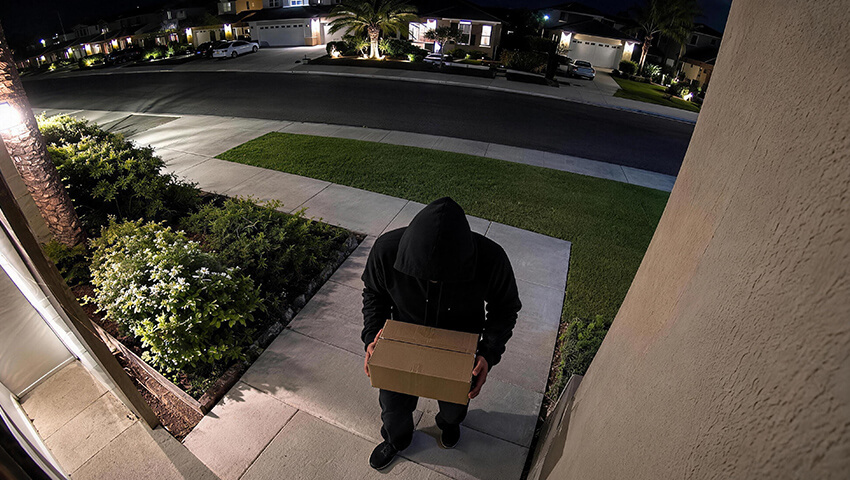
1. A delivery driver leaves a package at the front door
2.The homeowner is not immediately present
3. The package remains visible and unattended
4. An individual walks or drives by and notices it
5. The package is taken within seconds
What makes this process concerning is how quickly it happens. In many cases, there is no confrontation, no forced entry, and no extended presence. It is purely an opportunity-based action.
Because of this speed, prevention is far more effective than recovery.
How to Prevent Package Theft Effectively
Preventing package theft does not require complicated systems. Instead, it relies on improving visibility, response time, and deterrence.
1. Improve visibility at the front door
The first step is ensuring clear awareness of what is happening outside the home. A well-positioned monitoring system helps:
– Capture the entire entry area
– Show both people and packages clearly
– Reduce blind spots near the doorway
Visibility alone significantly reduces opportunity.
2. Enable real-time alerts
Speed is critical. The faster you know a package has arrived, the faster you can respond.
Effective systems should provide:- Immediate notifications when motion or delivery is detected
– Alerts that are easy to notice and hard to miss
– Redundant alerts across multiple devices when possible
Real-time awareness dramatically reduces the time packages sit unattended.
3. Use two-way communication
Two-way audio capability adds another layer of protection. It allows homeowners to:
– Speak directly to delivery personnel
– Confirm drop-off instructions
– Deter potential theft through visible interaction
Even simple communication can change behavior at the doorstep.
4. Add deterrence signals
Many theft attempts stop before they happen when clear deterrents are present. These can include:
– Visible camera placement
– Indicator lights or recording signals
– Awareness that the area is being monitored in real time
Deterrence is often just as important as detection.
Smart Monitoring as a Prevention Strategy
Modern home monitoring systems are no longer just about recording events—they are about enabling real-time awareness and response.
1. Real-time awareness
Being able to see what is happening at your front door instantly allows homeowners to:
– Confirm deliveries immediately
– Identify unusual activity
– Respond quickly if needed
Awareness is the foundation of prevention.
2. Immediate response capability
When an alert is received, immediate action can be taken, such as:
– Speaking through a device
– Asking a neighbor to retrieve a package
– Alerting household members
Speed of response often determines whether a package is safe.
3. Evidence recording
If theft does occur, recorded footage becomes valuable for:
– Identifying what happened
– Supporting reports or claims
– Understanding security gaps
While prevention is ideal, documentation remains important.
Real-Life Scenarios Where Prevention Matters
Package theft is not limited to one type of household. It affects different living situations in different ways.
1. Traveling during summer vacation
When homes are empty for several days or weeks, packages may sit unattended unless proactive measures are in place.
2. Working full-time away from home
Even without travel, standard work hours often mean packages are delivered when no one is present.
3. Apartment shared entry areas
In multi-unit buildings, shared entrances create additional exposure since packages are often left in common areas.
Common Mistakes That Make Package Theft Easier
Many risks come from simple oversights:
– Leaving packages visible from the street
– Not checking notifications regularly
– Ignoring delivery alerts during busy hours
– Installing monitoring devices at poor angles that miss key areas
– Assuming “it won’t happen here”
These small gaps can significantly increase vulnerability.
Conclusion
Package theft in summer is not random—it is the result of predictable conditions: more travel, more deliveries, and longer periods of unattended packages.
The good news is that prevention is equally straightforward. By improving visibility, enabling real-time alerts, and increasing deterrence at the entry point, homeowners can significantly reduce risk.
Ultimately, the most effective protection strategy is not just about reacting after something happens, but about creating a system where opportunities for theft are minimized from the start.
Awareness, visibility, and fast response together form the foundation of modern home package security.