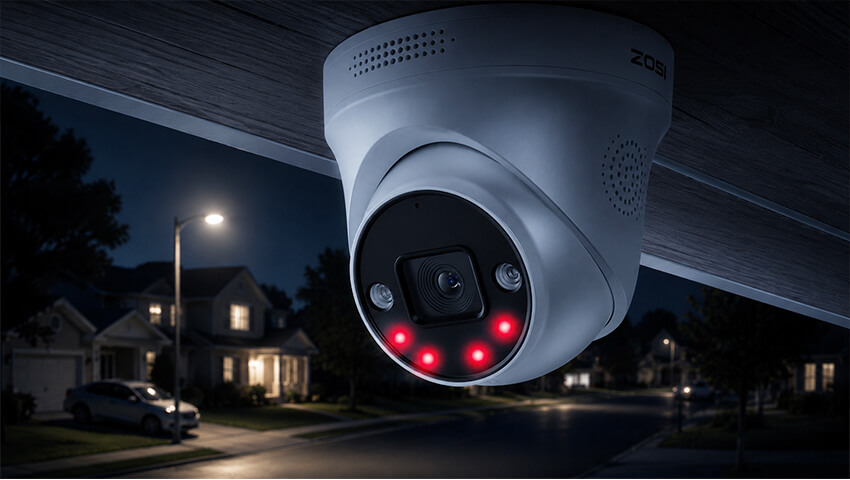
Night vision security cameras are designed to protect your home 24/7—but at night, many users notice an unexpected problem: flying insects appearing around the camera lens, sometimes even triggering false alerts or degrading video quality.
This is not a camera defect. It’s a natural interaction between light, heat, and the environment. The good news is: it can be significantly reduced with the right setup and practices.
Contents
Why Bugs Are Attracted to Night Vision Cameras
Flying insects are commonly drawn to security cameras for a few key reasons.
Most night vision cameras use infrared (IR) LEDs to illuminate dark areas. While invisible to the human eye, IR light can still attract or disorient insects. This is especially true for small flying bugs like moths and gnats.
Another factor is heat emission. Cameras running continuously may produce slight warmth, which can attract insects in cooler nighttime environments.
Finally, light reflection plays a role. IR light bouncing off nearby walls, glass, or metal surfaces can create a “glow zone” that insects tend to gather around.
Common Problems Caused by Bugs on Camera Footage
When insects gather near a camera, several issues may appear:
Frequent false motion alerts triggered by small insect movement
Flickering or flashing spots in night footage
Reduced clarity due to insects passing close to the lens
Increased storage usage from unnecessary recordings
These issues can reduce the effectiveness of your security system, especially during critical nighttime monitoring.
Effective Ways to Stop Flying Bugs Around Cameras
1. Adjust Camera Placement
Placement is the first and most important factor.
Avoid installing cameras:
- Near outdoor lights or bright fixtures
- Close to reflective walls or windows
- Near plants, bushes, or insect-prone areas
Instead, choose open, well-ventilated positions with minimal nearby light sources.
2. Reduce Light Attraction
Insects are highly sensitive to light.
To minimize attraction:
- Switch outdoor lights to warm/yellow tones
- Turn off unnecessary lighting at night
- Use shielded lighting that directs light downward instead of outward
This reduces the “beacon effect” that draws insects toward the camera area.
3. Clean the Camera Regularly
Dust, pollen, and moisture on the lens or IR panel can increase light scattering, making the area more attractive to insects.
Regular cleaning helps maintain:
- Clear night vision quality
- Stable IR performance
- Reduced light distortion
4. Optimize Infrared Settings
If your camera supports adjustable IR:
- Lower IR intensity when possible
- Enable smart IR modes to balance exposure
- Avoid over-illumination of nearby surfaces
This helps reduce unnecessary light that attracts bugs.
5. Add Physical Barriers or Deterrents
Simple environmental tools can help:
- Install insect-repellent devices nearby (not blocking the camera view)
- Use fine mesh shields designed for outdoor electronics
- Apply safe anti-insect treatments in surrounding areas
These methods reduce insect presence without affecting camera performance.
6. Improve the Surrounding Environment
Long-term control comes from environmental management:
- Remove standing water near the installation area
- Trim vegetation that attracts insects
- Reduce excessive humidity around camera zones
A cleaner environment naturally leads to fewer insects.
Advanced Solution: Smarter Camera Technology
Modern security systems are also helping solve this issue on the technology side.
Advanced cameras can now:
- Differentiate between human motion and small insect movement
- Reduce false alarms using AI-based detection
- Optimize low-light imaging for clearer nighttime visibility
- Maintain detailed color footage even in dim environments
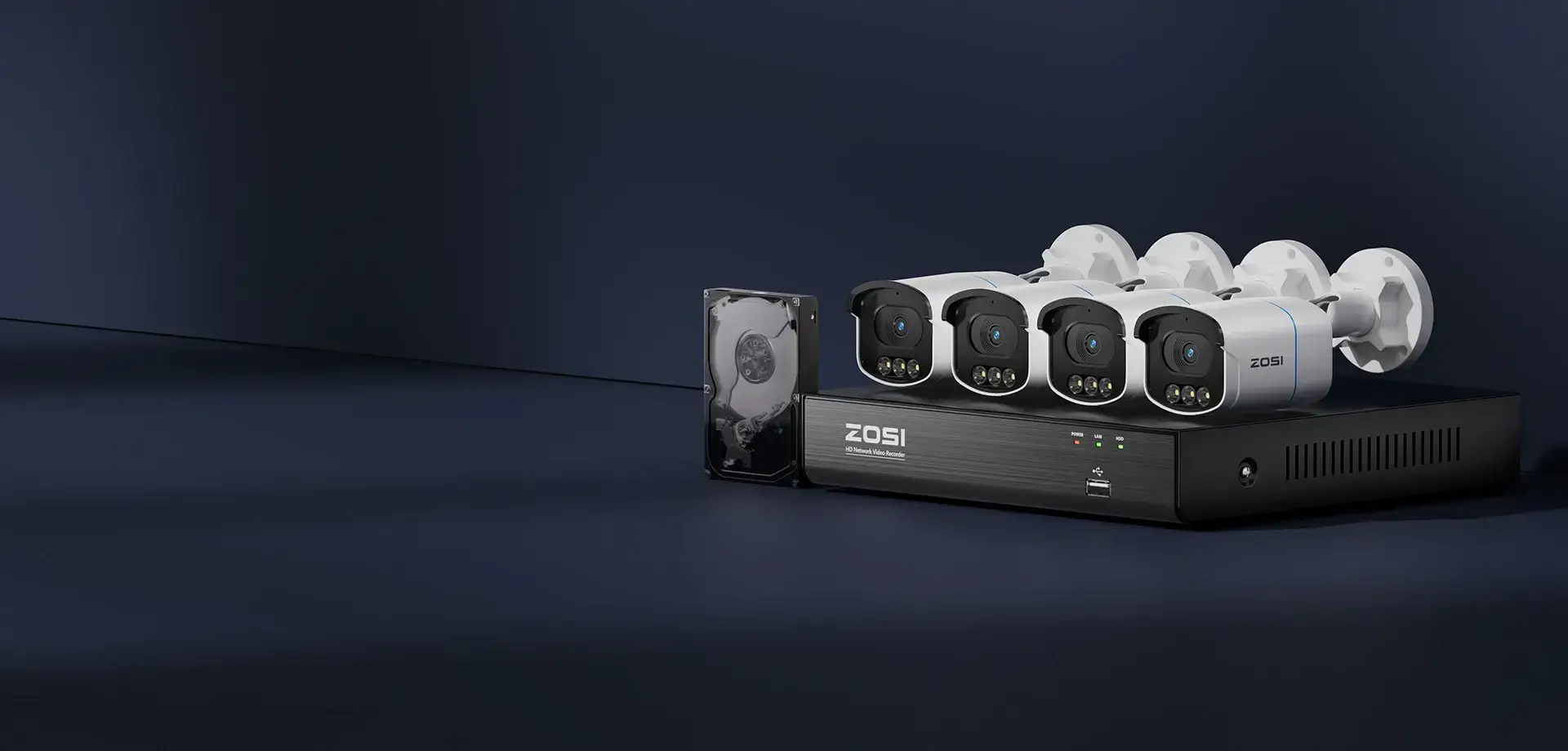
C186A 4K 8CH PoE Security System
- 4K Ultra HD
- True Full Color Night Vision
- PoE Plug and Play
- AI Person/Vehicle Detection
- Spotlight & Siren Deterrence
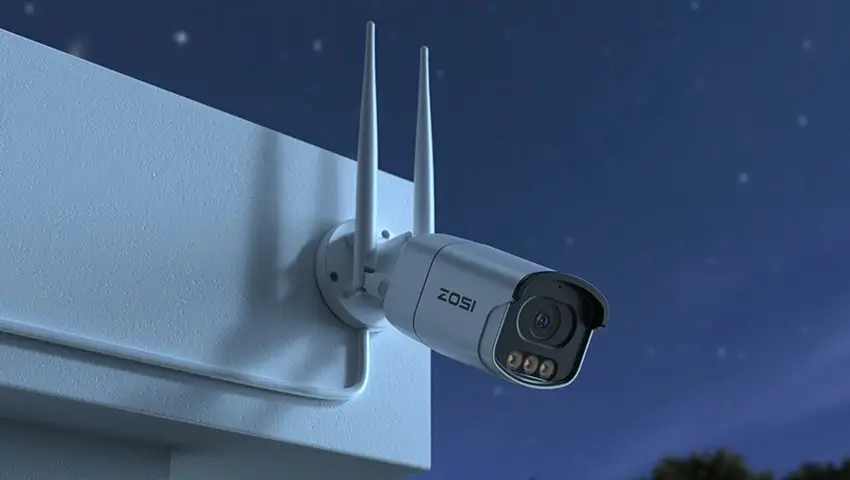
For example, the ZOSI C186 4K PoE Security Camera System
uses advanced AI ISP imaging technology and an ultra-large F1.0 aperture lens to deliver true color night vision in ultra-low-light conditions. Unlike traditional infrared night vision systems that rely heavily on IR LEDs or bright spotlights, the C186 can capture vivid nighttime footage naturally, helping reduce the insect attraction commonly caused by intense infrared illumination.
This approach not only improves nighttime image clarity, but also helps create a cleaner monitoring environment with fewer flying insects gathering around the camera.
Best Practices for Long-Term Bug-Free Monitoring
To get the best results, combine multiple strategies:
- Smart placement away from light sources
- Controlled outdoor lighting
- Regular maintenance
- AI-powered motion detection
This layered approach significantly reduces insect interference and improves night surveillance performance.
FAQs
1. Do all night vision cameras attract insects?
Not all cameras attract insects equally. Cameras with strong IR illumination or nearby bright lights tend to attract more bugs. Advanced low-light cameras that rely less on IR light may help reduce insect activity around the camera.
2. Does infrared light affect video quality when bugs fly nearby?
Yes. When insects fly close to the lens, infrared light reflects strongly off their bodies, creating bright blurry spots or “orbs” in the footage that can temporarily block visibility.
3. Will turning off IR night vision stop bugs?
In some cases, yes. Reducing or disabling IR illumination may decrease insect attraction. Cameras with advanced true color low-light technology can maintain nighttime visibility without relying heavily on infrared lighting.
4. Can weather make bug problems worse?
Absolutely. Warm temperatures, humidity, rain, and nearby vegetation can increase insect activity around outdoor security cameras, especially during spring and summer.
Conclusion
Flying bugs around night vision cameras are a common but solvable issue. They are mainly attracted by infrared light, heat, and environmental conditions.
By optimizing camera placement, controlling lighting, maintaining cleanliness, and leveraging smarter detection technology, you can dramatically reduce insect interference and improve your overall security experience.
A well-configured system doesn’t just see in the dark—it sees clearly, accurately, and without distractions.