Choosing a video doorbell is one of the easiest ways to improve your home security. Whether you want to monitor visitors, protect packages, or simply know what is happening around your front door, a smart doorbell camera provides an extra layer of visibility and control.
However, with so many options available, one of the biggest questions homeowners face is:
Should you choose a wired video doorbell or a wireless video doorbell?
Both types have their own advantages. A wired doorbell camera can provide continuous power and reliable performance, while a wireless doorbell offers easier installation and more flexibility.
The right choice depends on your home setup, security needs, and how much maintenance you prefer.
In this guide, we’ll compare wired vs. wireless video doorbells based on power source, installation, maintenance, reliability, and features to help you find the best option for your home.
Contents
Wired vs. Wireless Video Doorbell: What’s the Difference?
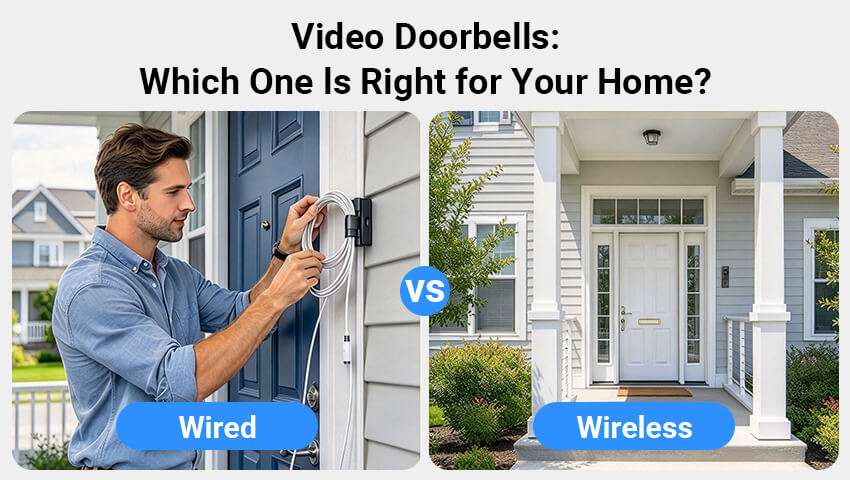
The main difference between wired and wireless video doorbells is how they receive power.
1. What Is a Wired Video Doorbell?
A wired video doorbell connects to a constant power source, usually through existing doorbell wiring or a direct power connection.
Because it receives continuous power, a wired doorbell camera does not rely on rechargeable batteries. This makes it a popular choice for homeowners who want a permanent security solution.
Common advantages of wired video doorbells include:
– Continuous power supply
– No need to recharge batteries
– Reliable operation for daily monitoring
– Suitable for high-traffic areas
– Ideal for long-term installation
For homeowners who use features like live view, motion detection, and frequent notifications, having a stable power source can be a major benefit.
2. What Is a Wireless Video Doorbell?
A wireless video doorbell typically uses a rechargeable battery for power and connects to your home WiFi network.
Because it does not require a wired power connection, installation is usually simpler. Many wireless models can be mounted in locations where running power cables is difficult.
Common advantages of wireless video doorbells include:
– Easy installation
– Flexible placement options
– No existing wiring required
– Convenient for renters or temporary setups
However, wireless doorbells require regular battery charging. Battery life can also vary depending on factors such as motion activity, weather conditions, and how often you use live viewing.
Wired vs. Wireless Video Doorbells: Key Differences
Understanding the differences between these two options can help you decide which type fits your lifestyle.
1. Power Source: Continuous Power vs. Battery Charging
Power is one of the most important factors when choosing a video doorbell.
1.1 Wired Video Doorbell Benefits
A wired or plug-in video doorbell receives power continuously. This means you do not need to worry about:
– Removing the device to charge the battery
– Forgetting to recharge before the battery runs out
– Reduced performance caused by low battery levels
For homeowners who want their doorbell camera available at all times, continuous power provides peace of mind.
A plug-in WiFi video doorbell can be a great solution for homes with an available indoor power outlet near the installation location. It offers the convenience of stable power without requiring complex wiring.
1.2 Wireless Video Doorbell Benefits
Wireless doorbells provide installation flexibility because they do not need a direct power connection.
They can be a good option if:
– Your home does not have existing doorbell wiring
– You want to install the camera in a different location
– You prefer a quick DIY setup
However, battery-powered devices need regular attention. Heavy motion activity, frequent recordings, and extreme temperatures may cause the battery to drain faster.
2. Installation: Which One Is Easier?
Installation is another important consideration.
2.1 Wired Video Doorbell Installation
Traditional wired doorbells may require electrical knowledge or professional installation, especially when connecting to existing wiring.
However, plug-in video doorbells provide another option. Instead of relying on existing doorbell wiring, they can use a direct power connection, making installation more straightforward.
A typical plug-in installation process may include:
– Selecting the best location near your front door
– Checking WiFi signal strength
– Mounting the doorbell camera
– Connecting the power source
– Setting up the mobile app
– Testing video, motion detection, and alerts
2.2 Wireless Video Doorbell Installation
Wireless doorbells are often considered easier to install because they typically require:
– Mounting the device
– Connecting to WiFi
– Setting up the app
This makes them appealing for renters or users who want a temporary security solution.
However, easier installation does not always mean less maintenance. Battery charging remains part of ownership.
3. Maintenance: Which Requires Less Attention?
When choosing a security device, maintenance is an important factor.
3.1 Wired or Plug-In Video Doorbells
Advantages include:
– No battery replacement
– No charging schedule
– Consistent availability
– Less hands-on maintenance
This makes wired and plug-in models especially convenient for homeowners who want a “set it and monitor it” security solution.
3.2 Wireless Video Doorbells
Wireless models require battery management.
You may need to:
– Check battery levels regularly
– Recharge the device periodically
– Remove the camera for charging
For some users, this is a reasonable trade-off for easier installation. For others, continuous power may be more convenient.
4. Video Quality and Smart Features
When comparing video doorbells, power type is only one factor. Modern doorbell cameras also include many smart security features.
Important features to consider include:
4.1 Video Resolution
Higher resolution helps capture clearer details, especially when viewing:
– Faces
– Package deliveries
– Visitors at the door
– Outdoor activity
Many modern video doorbells now offer HD, 2K, and 2.5K video quality.
4.2 Motion Detection
Motion detection helps you receive alerts when activity happens near your entrance.
Useful features include:
– Motion notifications
– Human detection
– Adjustable detection areas
– Activity monitoring
4.3 Night Vision
A good video doorbell should provide clear footage both day and night.
Look for features such as:
– Infrared night vision
– Full-color night vision
– Low-light performance
4.4 Two-Way Audio
Two-way audio allows you to communicate with visitors remotely.
Common uses include:
– Talking to delivery drivers
– Greeting guests
– Warning unwanted visitors
4.5 Indoor Chime
A video doorbell with a chime provides an additional way to know when someone presses your doorbell.
Instead of relying only on smartphone notifications, an indoor chime allows people inside the home to hear alerts immediately.
Which Video Doorbell Is Right for Your Home?
There is no single option that works best for every household. The right choice depends on your priorities.
Choose a Wired or Plug-In Video Doorbell If You:
✔ Want reliable continuous power
✔ Prefer less maintenance
✔ Use motion alerts frequently
✔ Want long-term front door security
✔ Have a convenient power source nearby
A plug-in WiFi video doorbell can offer a balance between easy installation and dependable performance.
Choose a Wireless Video Doorbell If You:
✔ Need flexible installation
✔ Do not have access to power nearby
✔ Want a quick setup
✔ Prefer a battery-powered solution
Wireless models are especially useful when installation flexibility is the top priority.
Why a Plug-In WiFi Video Doorbell Can Be a Smart Choice
For many homeowners, a plug-in video doorbell provides the advantages of both convenience and reliability.
A product like the ZOSI 2.5K Plug-in WiFi Video Doorbell with Chime is designed for users who want:
– Stable plug-in power
– High-resolution video monitoring
– nSmartphone access
– Motion alerts
– Two-way communication
– Indoor chime convenience
Unlike battery-powered models that require charging, a plug-in design allows homeowners to focus more on monitoring their property and less on maintenance.
For front door security, package monitoring, and everyday visitor awareness, a reliable power source can make a noticeable difference.
Things to Consider Before Buying a Video Doorbell
Before choosing your next doorbell camera, consider these questions:
1. What Power Option Works Best?
Ask yourself:
Do I already have doorbell wiring?
Is there a nearby power outlet?
Do I want to recharge a battery regularly?
2. Where Will the Doorbell Be Installed?
The best location usually provides:
A clear view of the entrance
Good WiFi coverage
Protection from extreme weather
Minimal obstructions
3. What Security Features Do I Need?
Consider:
Video resolution
Motion detection
Night vision
Two-way audio
Storage options
Privacy settings
FAQs
Q: Are wired video doorbells better than wireless ones?
A: It depends on your needs. Wired and plug-in video doorbells provide continuous power, while wireless models offer easier installation and more placement flexibility.
Q: Do plug-in video doorbells need batteries?
A: No. Plug-in video doorbells use a direct power connection and do not require regular battery charging.
Q: Are wireless video doorbells reliable?
A: Wireless video doorbells can be reliable when properly installed, but performance may depend on WiFi strength, battery level, and usage conditions.
Q: Can I install a video doorbell myself?
A: Many plug-in and wireless video doorbells are designed for DIY installation. Always follow the manufacturer’s installation instructions.
Conclusion
When comparing wired vs. wireless video doorbells, the best choice depends on your home environment and personal preferences.
Wireless doorbells offer flexibility and easy installation, while wired and plug-in video doorbells provide consistent power and lower maintenance.
If you want a dependable security solution for your front door without worrying about battery charging, a plug-in WiFi video doorbell can be a practical choice.
By considering power, installation, features, and long-term convenience, you can choose a video doorbell that fits your home and helps you stay connected to what matters most.
Related Posts