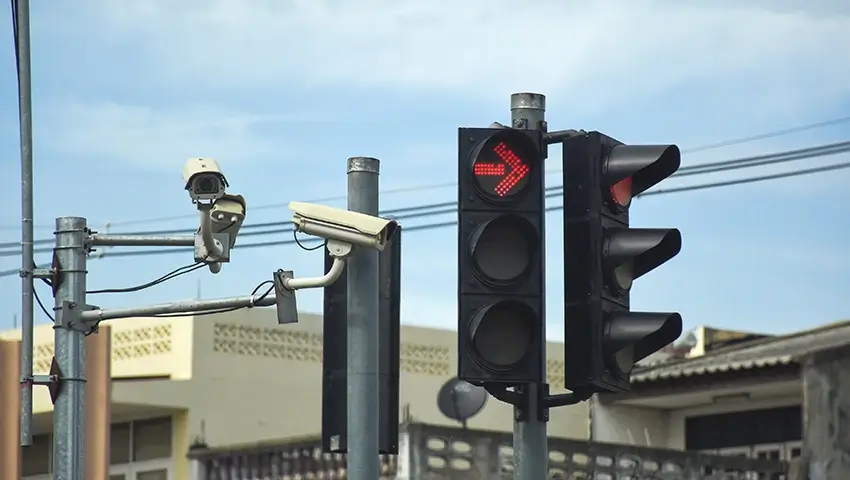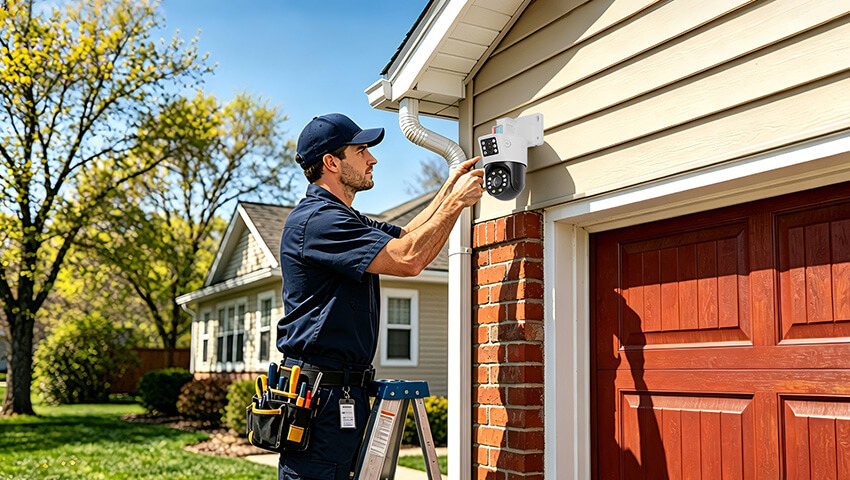
Security cameras are one of the most powerful tools in ensuring the safety and protection of your home or business. But for them to work effectively, careful consideration must be given to where you place them. An incorrect installation can result in blind spots, poor footage quality, or even legal and privacy issues. It’s not just about installing cameras everywhere – it’s about knowing where not to install them.
To help you maximize your security coverage, we’ve compiled a comprehensive guide on the areas you should avoid when installing security cameras. Let’s explore these critical locations and understand why they can compromise your system’s effectiveness.
Contents
Behind Obstructions (Trees, Walls, or Window Bars)
While you might think hiding your cameras behind bushes, trees, or even window grills will prevent them from being noticed, it can severely limit their visibility and effectiveness. Obstructions like branches or window bars can block the camera’s view, making it difficult to capture clear footage.
Why to Avoid: Obstructions will obstruct the camera’s field of view, leading to poor image quality or missed events.
Alternative Solution: Place your camera in a clear line of sight with wide, unobstructed angles. This ensures that the camera has a clear view of entry points or areas of interest.
Directly Facing Sunlight or Bright Lights
Cameras facing the sun or artificial bright lights are bound to suffer from glare and overexposure, leading to distorted or unusable footage. The sunlight can cause “whiteout” conditions where the camera can’t properly distinguish objects, leaving you vulnerable to security breaches during the day.
Why to Avoid: Sun glare can ruin the video quality, preventing cameras from capturing the fine details needed for surveillance.
Alternative Solution: Install cameras in a way that they’re shielded from direct sunlight. You can use external shades or cameras with automatic exposure adjustments or HDR features to combat harsh lighting.
High-Traffic or Overcrowded Areas
It may seem like a good idea to install cameras in high-traffic areas such as busy hallways or entrances to get footage of every movement. However, too much activity in these areas can lead to irrelevant footage, making it harder to distinguish actual threats from everyday motion.
Why to Avoid: Excessive movement can result in unnecessary footage, causing you to miss critical events or overload your storage with irrelevant data.
Alternative Solution: Focus cameras on areas that hold value, like your front and back doors, windows, or places where valuable items are stored. This ensures that you’re capturing the most important moments without being overwhelmed by noise.
Poorly Lit Areas (Especially Indoors)
Security cameras are only as good as the lighting conditions they’re operating in. Low light or complete darkness will render even the best cameras useless, as most cameras rely on visible light or infrared technology to capture clear images. Without sufficient lighting, your cameras will fail to provide useful footage, especially in critical situations.
Why to Avoid: Lack of light significantly reduces the camera’s ability to capture clear footage, particularly at night.
Alternative Solution: Ensure that your cameras are installed in areas with adequate lighting, or use models equipped with strong night vision capabilities. Additionally, you can pair your cameras with motion-activated lights to brighten key areas.
Difficult-to-Access Locations
Installing cameras in locations that are hard to reach for maintenance or troubleshooting is a common mistake. Whether it’s a high ceiling, hidden corner, or a wall covered in foliage, inaccessible installations can create problems when you need to perform regular maintenance or repair.
Why to Avoid: Over time, cameras can accumulate dust, dirt, and weathering, which can impair their functionality. If cameras are out of reach, you’ll struggle to clean lenses or adjust settings.
Alternative Solution: Install cameras in areas that are easy to reach, whether by ladder or from the ground level. Ensure that regular maintenance is simple to perform and doesn’t require complex tools or special equipment.
Wi-Fi Dead Zones or Poor Connectivity Areas
For wireless cameras, placement in areas with poor or no Wi-Fi connectivity can severely undermine their performance. If your camera is located in a Wi-Fi dead zone, it may fail to send real-time footage to your monitoring system, rendering it useless when you need it most.
Why to Avoid: A camera in a Wi-Fi dead zone won’t be able to transmit data or send you live alerts, rendering the system ineffective.
Alternative Solution: Before installation, use your phone or a Wi-Fi signal analyzer to check signal strength throughout your home or business. Place cameras where the Wi-Fi signal is strong and reliable. If necessary, consider installing Wi-Fi extenders to ensure full coverage.
Overlooking Neighbor’s Property or Private Spaces
When setting up security cameras, it’s essential to respect the privacy of your neighbors and ensure you’re not violating any legal restrictions. Installing cameras that point directly at a neighbor’s windows or private spaces can cause privacy concerns and legal issues, potentially leading to complaints or even lawsuits.
Why to Avoid: Privacy invasion is illegal in many jurisdictions and can lead to legal consequences.
Alternative Solution: Position cameras so they focus solely on your property and avoid pointing them toward neighboring homes or gardens. This ensures compliance with privacy laws while still providing the coverage you need.
Inside Bedrooms, Bathrooms, or Changing Rooms
Though it may seem like a good idea to monitor all parts of your home, certain areas should remain off-limits. Bedrooms, bathrooms, and changing rooms are personal spaces, and installing cameras in these areas can be seen as an invasion of privacy. In many places, this can be illegal.
Why to Avoid: Surveillance in personal spaces can cause significant privacy concerns and legal issues.
Alternative Solution: Stick to public or common areas where security cameras can effectively monitor activity without infringing on personal privacy.
Near Vulnerable or Tamper-Prone Locations
Installing cameras in locations where they can easily be tampered with or damaged is a critical mistake. For instance, cameras placed in easily reachable spots near fences or on low walls can be destroyed or disabled by intruders.
Why to Avoid: Cameras in vulnerable spots can be destroyed or disabled, rendering them useless.
Alternative Solution: Install cameras at higher vantage points, out of reach of potential intruders. Make sure they are housed in tamper-resistant enclosures and use models that are weatherproof and vandal-proof.
Next to Windows Without Special Coatings or Filters
Many homeowners install cameras next to windows to keep an eye on their surroundings. However, windows can introduce a range of problems, from reflections to glare, which can significantly impact footage quality.
Why to Avoid: Reflections from the window surface can distort the camera’s view, leading to unclear or unreliable footage.
Alternative Solution: Install cameras at angles that reduce reflections, or use specialized outdoor cameras designed to function through glass windows. Another option is using tinted or anti-reflective windows to minimize interference.
FAQs
1. Can I install security cameras anywhere on my property?
Not exactly. While you have the right to monitor your own property, there are limitations—especially when it comes to privacy. Avoid placing cameras where they capture areas like your neighbor’s home, public sidewalks beyond your boundary, or private indoor spaces. Always check local laws to stay compliant.
2. Is it illegal to install cameras in bedrooms or bathrooms?
In most regions, yes—especially if other people are involved. These are considered private spaces, and recording in such areas can lead to serious legal consequences. Even within your own home, it’s best to avoid installing cameras in areas where privacy is expected.
3. Should security cameras be visible or hidden?
Ideally, both.
Visible cameras act as a strong deterrent to intruders
Hidden cameras can capture unnoticed activity if someone tries to avoid detection
A combination of both provides the most effective coverage.
Conclusion
The placement of your security cameras plays a huge role in their ability to protect your property. Avoiding these common mistakes will ensure your system is both effective and legally compliant. By placing your cameras in optimal locations with the right angles, lighting, and connectivity, you’ll enhance their performance and provide peace of mind knowing your home or business is secure.
When selecting a camera system, consider features like motion detection, night vision, and remote access. These features can further optimize your surveillance setup. For those looking to upgrade their security system, ZOSI offers a range of advanced cameras that provide crystal-clear footage in any condition.
Don’t let poor camera placement compromise your safety—choose your spots wisely and maximize the power of your surveillance system. If you have any tips or questions about camera placement, feel free to share them in the comments below.