Contents
Introduction
With the rapid development of smart security technology, surveillance cameras have become an essential part of both residential and commercial security systems. Whether you want to protect your home, office, warehouse, or retail store, choosing the right type of camera is critical for long-term reliability and performance. Among the most popular options on the market today are PoE (Power over Ethernet) cameras and WiFi cameras.
Although both types are designed to enhance security and provide remote monitoring, they differ significantly in terms of installation, stability, performance, and suitable use cases. Understanding these differences can help you make a more informed decision based on your actual needs. In this article, we will explain what a PoE camera is, how it works, and provide a detailed comparison of PoE cameras vs WiFi cameras to help you choose the best surveillance solution.
What Is a PoE Camera?
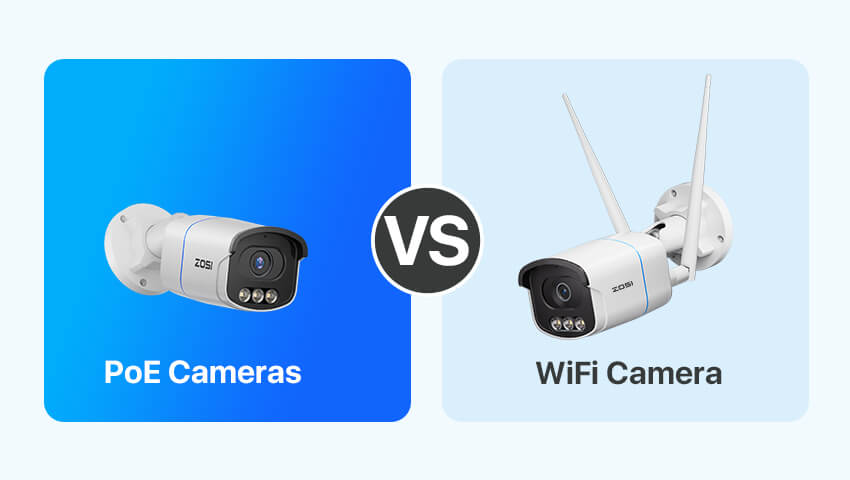
A PoE camera, short for Power over Ethernet camera, is a type of IP (Internet Protocol) security camera that receives both power and data through a single Ethernet cable. Instead of using a separate power adapter and network connection, PoE cameras rely on one cable connected to a PoE-enabled network video recorder (NVR), PoE switch, or injector.
How PoE Cameras Work
PoE technology allows electrical power to be transmitted alongside data over standard Ethernet cables (such as Cat5e or Cat6). When a PoE camera is connected to a compatible device, it receives power and sends video data through the same cable, simplifying installation and reducing cable clutter.
Key Features of PoE Cameras
Stable wired connection for consistent video transmission
High video quality, often supporting 2K, 4K, or higher resolutions
Lower interference risk compared to wireless signals
Centralized power management through NVR or PoE switch
Enhanced security, as data is transmitted via a closed wired network
Because of these advantages, PoE cameras are widely used in professional surveillance systems, including office buildings, factories, schools, and large residential properties.
What Is a WiFi Camera?
A WiFi camera is a wireless security camera that connects to the internet through a WiFi network instead of an Ethernet cable. These cameras transmit video data wirelessly to a cloud server, local storage device, or mobile app, making them popular for home users seeking a quick and flexible setup.
How WiFi Cameras Work
WiFi cameras use a wireless router to send video footage over the internet. Most models still require a power source, which may be a power adapter, battery, or solar panel, but they do not need a network cable for data transmission.
Key Features of WiFi Cameras
·Wireless data transmission for flexible placement
·Easy installation, ideal for beginners
·Compact and portable design
·Remote access via mobile apps
·Battery-powered or plug-in options available
WiFi cameras are especially popular in apartments, rental homes, and small indoor spaces where running Ethernet cables may be inconvenient.
PoE vs WiFi Camera: Key Differences Explained
To better understand which option suits your needs, let’s compare PoE cameras and WiFi cameras across several important aspects.
1. Installation and Setup
·PoE Cameras: Installation requires running Ethernet cables from each camera to a PoE NVR or switch. While this takes more planning and effort, the setup is clean, professional, and highly reliable once completed.
·WiFi Cameras: WiFi cameras are easier and faster to install. Most only need to be powered on and connected to a WiFi network through an app, making them ideal for users with minimal technical experience.
2. Connection Stability and Reliability
·PoE Cameras: Since they use a wired connection, PoE cameras offer extremely stable performance. They are not affected by WiFi congestion, signal drops, or interference from walls and other devices.
·WiFi Cameras: Wireless signals can be impacted by distance, network traffic, and obstacles, which may result in lag, buffering, or disconnections.
3. Video Quality and Performance
·PoE Cameras: Typically support higher resolutions such as 4MP, 5MP, 8MP (4K), and advanced features like higher frame rates and continuous recording.
·WiFi Cameras: While modern WiFi cameras can offer good image quality, bandwidth limitations may compress video or reduce performance, especially with multiple cameras connected.
4. Power Supply and Maintenance
·PoE Cameras: Powered through Ethernet, eliminating the need for separate power outlets near the camera. This reduces maintenance and ensures continuous operation.
·WiFi Cameras: Battery-powered models require regular recharging, while plug-in models still depend on nearby outlets.
Which Camera Is Best for You?
Choosing between a PoE camera and a WiFi camera depends on your specific needs:
·Choose PoE cameras if you need a stable, high-quality, and scalable surveillance system for long-term use, especially for outdoor areas or large properties.
·Choose WiFi cameras if you want a quick, flexible, and affordable solution for indoor monitoring or temporary installations.
In many cases, users even combine both types to create a hybrid security system that balances convenience and performance.
Conclusion
Both PoE cameras and WiFi cameras play important roles in modern surveillance systems, but they are designed for different use cases. PoE cameras excel in reliability, video quality, and security, making them ideal for professional and large-scale installations. WiFi cameras, on the other hand, offer convenience, flexibility, and ease of use, making them a popular choice for homes and small spaces.
By understanding the strengths and limitations of each option, you can choose the security camera system that best fits your environment, budget, and long-term security goals. Investing in the right surveillance solution today can provide peace of mind and reliable protection for years to come.