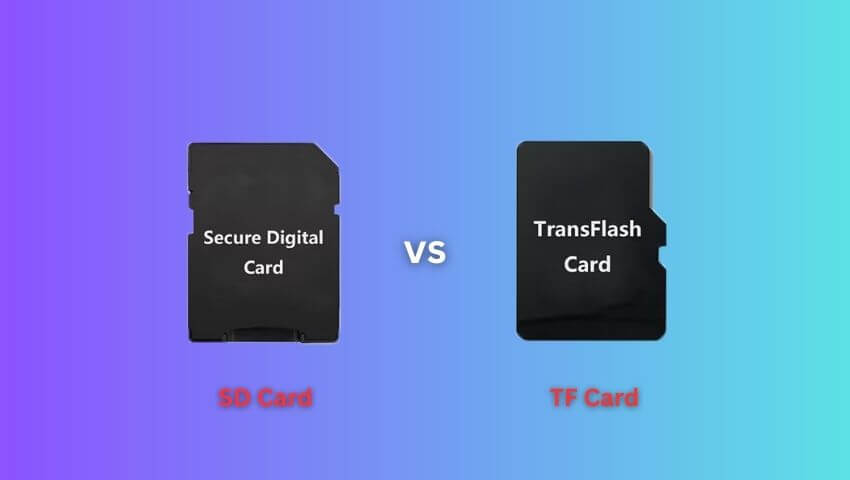
In the world of digital storage, memory cards play a crucial role in storing photos, videos, and other data. Two of the most common types of cards you’ll encounter are SD cards and TF cards. While they might seem similar at first glance, there are several key differences that determine which is best for your device, whether it’s a camera, smartphone, or security system. In this article, we’ll explore everything you need to know about SD and TF cards, compare their advantages and disadvantages, and help you make the right choice, especially for security cameras.
Contents
Introduction: Understanding SD and TF Cards
Before diving into their differences, let’s briefly define what SD and TF cards are.
SD Card (Secure Digital Card): This is a type of non-volatile memory card commonly used in cameras, laptops, and other devices to store data. SD cards come in several sizes, including standard SD, miniSD, and microSD.
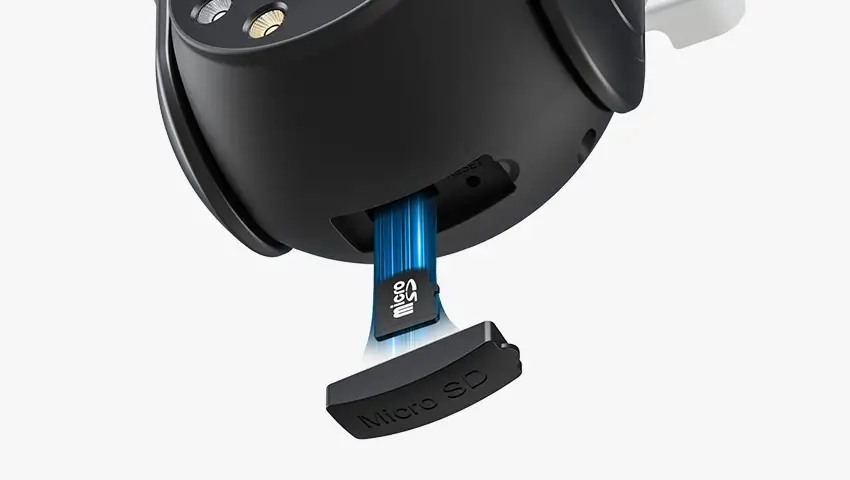
TF Card (TransFlash Card): Often referred to as microSD cards, TF cards are essentially a smaller version of SD cards. Originally developed by SanDisk in 2004, TF cards are compact, versatile, and widely used in smartphones, drones, and compact electronics.
At their core, TF cards and SD cards serve the same purpose: portable, rewritable memory storage. However, their design, size, and application vary. Understanding these differences is essential when choosing the right card for your needs.
TF vs SD: What Sets Them Apart?
When comparing TF cards and SD cards, the differences can be summarized in several areas:
1.Physical Size:
SD cards are larger, measuring about 32mm x 24mm, whereas TF cards are tiny, roughly 15mm x 11mm. This smaller size makes TF cards ideal for compact devices where space is limited.
2.Compatibility:
Most SD card slots support standard SD cards. TF cards, being smaller, usually require an adapter to fit into standard SD slots. However, devices that use microSD slots can directly accept TF cards without adapters.
3.Storage Capacity:
Both SD and TF cards come in a variety of capacities, from a few gigabytes to over 1TB. While storage size options are similar, high-capacity SD cards are often used in professional cameras and high-end recording equipment, while TF cards dominate in mobile devices and smaller electronics.
4.Speed and Performance:
The speed class of a memory card is critical for applications like video recording. SD and TF cards share similar speed classifications (Class 10, UHS-I, UHS-II, V30, etc.). In practice, high-speed TF cards can match SD cards for everyday tasks, but for professional-grade photography or 4K video, high-end SD cards often perform better.
5.Durability:
Some SD cards are designed to be more robust, offering resistance to water, heat, and shock. TF cards can also have similar protections, but due to their smaller size, they are easier to lose and more susceptible to physical damage if not handled carefully.
Side-by-Side Comparison of TF and SD Cards
While we won’t include a table, it’s useful to compare TF and SD cards in plain language:
Size: SD cards are larger; TF cards are tiny.
Adapter Needed: TF cards may need an adapter for SD slots; SD cards don’t.
Device Usage: SD cards are common in cameras, laptops, and printers; TF cards are prevalent in smartphones, drones, and compact devices.
Storage: Both can offer large capacities, but SD cards dominate in high-capacity professional applications.
Speed: High-end SD cards can offer better sustained write speeds, though top-tier TF cards are very competitive.
Cost: TF cards tend to be slightly cheaper at lower capacities, while high-performance SD cards cost more.
By understanding these differences, you can better select the right card for your needs, whether for daily use or specialized equipment.
Advantages and Disadvantages of Each Card Type
Every memory card comes with its own set of benefits and drawbacks. Let’s explore them in detail.
SD Card Advantages:
– Larger physical size makes handling easier.
– Commonly used in cameras and devices that require reliable, high-speed performance.
– Supports higher-end, professional storage capacities and speed classes.
– Durable and often designed for rugged use.
SD Card Disadvantages:
– Bigger size can be inconvenient for compact devices.
– Slightly more expensive for high-speed, high-capacity models.
TF Card Advantages:
– Extremely compact, perfect for smartphones, drones, and portable devices.
– Affordable and widely available.
– Compatible with many devices via adapters.
– Good balance of speed and storage for everyday use.
TF Card Disadvantages:
– Small size makes it easy to misplace.
– May require an adapter for use in SD slots.
– Less common in professional cameras or devices requiring very high-speed performance.
Choosing the Right Card for Your Device
When deciding between SD cards and TF cards, consider these factors:
1.Device Compatibility:
Check your device’s specifications. Some cameras and drones only accept microSD/TF cards, while DSLR cameras usually require full-size SD cards.
2.Storage Needs:
For casual photo storage, a 32GB or 64GB card may be sufficient. For 4K video recording or continuous surveillance, you’ll want a high-capacity card (128GB, 256GB, or more).
3.Speed Requirements:
For recording HD or 4K video, choose cards with higher speed ratings (Class 10, UHS-I/UHS-II, or V30+). TF cards can offer competitive speeds but high-end SD cards may be more reliable for long, uninterrupted recordings.
4.Durability and Security:
If your device operates outdoors or in harsh conditions, consider cards with water, shock, and temperature resistance. Some SD cards are designed specifically for extreme environments.
5.Budget:
TF cards are often cheaper at lower capacities. If you need professional-grade performance, investing in high-quality SD cards is worthwhile.
Best Card for Security Cameras: SD or TF?
Security cameras have become an essential part of home and business protection. Choosing the right memory card is crucial for reliable operation.
1.TF Cards for Security Cameras:
Most modern compact Wi-Fi cameras use microSD/TF cards due to their small size. TF cards are easy to replace, cost-effective, and widely compatible with many brands. High-speed TF cards ensure smooth continuous recording without dropped frames.
2.SD Cards for Security Cameras:
Larger security systems, such as professional NVR/DVR setups, often rely on full-size SD cards or dedicated storage solutions. SD cards can handle higher storage capacities and sustained write speeds for multiple high-resolution cameras.
Recommendation:
For consumer-level indoor and outdoor Wi-Fi cameras, TF cards are usually the best choice. They balance cost, size, and speed, making them ideal for everyday use. For high-end multi-camera setups or professional surveillance, SD cards may offer better performance and longevity.
FAQ
Q: Are TF cards and microSD cards the same?
A: Yes, TF cards were the original name for microSD cards. Today, they are interchangeable terms, with microSD being the more common name.
Q: Can I use a TF card in an SD card slot?
A: Yes, with a proper adapter. The TF/microSD card fits into the adapter, which then functions as a full-size SD card.
Q: How do I know which card speed I need?
A: Check your device’s requirements. For 1080p video, Class 10 is usually sufficient. For 4K video, look for UHS-I/UHS-II or V30-rated cards.
Q: Do SD or TF cards affect security camera reliability?
A: Yes, speed and durability impact performance. A slow or low-quality card may result in dropped frames, corrupted recordings, or device errors. Always use a reputable brand and consider high-end cards for continuous recording.
Q: Can I use the same card in multiple devices?
A: Yes, but frequent switching may increase the risk of card corruption. Always safely eject and backup data when moving between devices.
Conclusion:
In the debate between SD cards vs TF cards, the right choice largely depends on your device, storage needs, and usage scenario.
— Choose TF/microSD cards for compact devices, Wi-Fi cameras, drones, and smartphones. They are cost-effective, versatile, and widely compatible.
— Choose full-size SD cards for professional cameras, high-capacity storage needs, and setups requiring robust and sustained performance.
When selecting a memory card, always prioritize speed, durability, and reliability, especially for critical applications like security cameras. Investing in a high-quality card ensures your devices operate smoothly and your important data stays safe.
By understanding the differences and advantages of SD and TF cards, you can confidently pick the right storage solution for your electronics and security devices. Whether it’s capturing precious memories or keeping your home safe, the right card makes all the difference.