
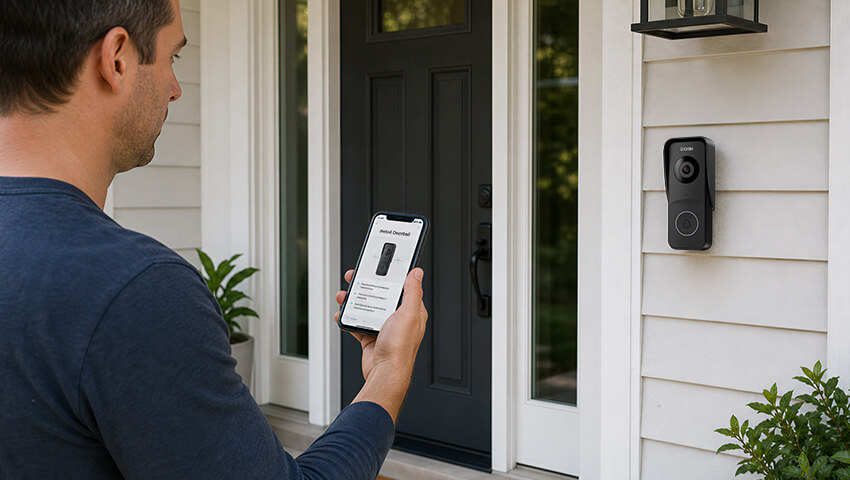
Planning to install a wired video doorbell but not sure where your doorbell transformer is located?
The transformer is an important part of your existing doorbell system. It provides the power needed for your doorbell and helps ensure your video doorbell works properly.
Before installation, finding and checking your doorbell transformer can help you:
– Confirm if your current wiring is compatible
– Avoid power-related installation issues
– Ensure reliable performance from your video doorbell
In this guide, we’ll explain where to find your doorbell transformer, how to identify it, and what to check before upgrading your doorbell system.
Contents
What Is a Doorbell Transformer and Why Do You Need One?
A doorbell transformer is a small electrical component that supplies power to your doorbell system. Its main purpose is to convert your home’s standard electrical power into a lower voltage that is safe and suitable for doorbell devices.
Traditional doorbell systems usually include three main components:
– Doorbell button
– Indoor chime
– Doorbell transformer
The transformer provides the power needed for the doorbell button and chime to operate properly.
For modern video doorbells, the transformer plays an even more important role. Unlike traditional doorbells, smart doorbells need continuous power to support advanced features such as:
– Camera operation
– WiFi connection
– Motion detection
– Live video streaming
– Mobile notifications
– Two-way communication
If the transformer does not provide enough power, a video doorbell may experience issues such as frequent disconnecting, delayed alerts, or unexpected shutdowns.
Understanding where your transformer is located and whether it works properly is an important step before installing a wired video doorbell.
Where Is a Doorbell Transformer Usually Located?
Unlike the doorbell button or indoor chime, the transformer is often installed in a hidden location. Its exact position depends on the design of your home’s electrical system.
Here are some of the most common places to check.
1. Near the Electrical Panel
One of the most common locations for a doorbell transformer is near the electrical panel.
Check areas such as:
– Basement
– Utility room
– Garage
– Electrical closet
Because the transformer connects to your home’s electrical system, electricians often install it close to the breaker box.
Look for a small metal box attached to an electrical junction box. It may appear different from regular electrical components because it usually has low-voltage wires connected to it.
2. Inside the Garage
The garage is another common location, especially in many American homes.
Check:
– Garage walls
– Ceiling areas
– Near electrical wiring
– Around utility equipment
Garages often have exposed electrical components, making the transformer easier to locate compared with finished indoor areas.
3. Near the Existing Doorbell Chime
Your indoor doorbell chime can provide clues about where the transformer is located.
Remove the cover of your existing chime and look for wiring labels such as:
– TRANS
– FRONT
– REAR
The terminal marked “TRANS” connects to the transformer.
Although the transformer is not always installed inside or directly next to the chime, checking the wiring can help you understand how your doorbell system is connected.
4. Basement, Attic, or Crawl Spaces
In older homes, transformers may be installed in less obvious places.
Common locations include:
– Basement walls
– Attic spaces
– Crawl spaces
Older electrical installations can vary significantly, so checking hidden areas may be necessary if you cannot find the transformer in common locations.
5. Near Other Utility Equipment
Some homes have transformers installed near other electrical equipment, including:
– HVAC systems
– Water heaters
– Utility panels
If the usual locations do not reveal the transformer, expanding your search area can help.
How to Find Your Doorbell Transformer Step by Step
If you are unsure where to start, follow these steps to locate your transformer more efficiently.
Step 1: Check Your Existing Doorbell Setup
Start with the parts of your doorbell system that are easy to find.
Check:
– The outdoor doorbell button
– Indoor chime
– Visible wiring
Understanding where the wires enter and leave these components can provide clues about the transformer’s location.
Step 2: Inspect the Indoor Chime
The indoor chime is often the best starting point.
Carefully remove the cover and check the terminals.
You may see labels such as:
– FRONT
– TRANS
– REAR
The “TRANS” connection indicates the wire leading to the transformer.
Following this wire path can help narrow down the transformer location.
Step 3: Follow the Doorbell Wiring
Most traditional doorbell systems follow a basic wiring path:
Doorbell button → Indoor chime → Transformer
Following visible low-voltage wires from the chime area can help you locate where the transformer may have been installed.
Step 4: Search Common Installation Areas
Check these locations carefully:
– Near the electrical panel
– Garage walls or ceilings
– Basement areas
– Utility rooms
– Closets near wiring
– Attic spaces
A flashlight can be useful when checking darker areas.
Step 5: Identify the Transformer
A typical doorbell transformer usually has these characteristics:
– Small rectangular shape
– Metal housing
– Mounted on or near an electrical box
– Thin low-voltage wires connected
Many transformers also have labels showing voltage information, such as:
16V
18V
24V
How to Identify a Doorbell Transformer
Finding a small electrical component does not always mean you have found the correct transformer.
A doorbell transformer usually has several identifying features.
1. Small Metal Box Design
Most doorbell transformers are compact compared with other electrical devices in your home.
They are typically much smaller than:
– Circuit breakers
– Power supplies
– Electrical control units
2. Low-Voltage Wiring
A transformer usually has two types of connections:
– Household electrical input
– Low-voltage output wires for the doorbell
The low-voltage wires are usually thinner than standard household wiring.
3. Voltage Labels
Look for markings such as:
– Class 2 Transformer
– Doorbell Transformer
– Voltage ratings
These labels can help confirm whether the component belongs to your doorbell system.
How to Check If Your Doorbell Transformer Works Properly
After locating the transformer, the next step is checking whether it can properly support your doorbell.
1. Check the Voltage Rating
Doorbell transformers commonly provide low-voltage power, with many systems using ratings such as:
16V
18V
24V
Before installing a video doorbell, compare your transformer specifications with the power requirements of your device.
An incompatible transformer may cause:
– Connection interruptions
– Camera restarting
– Delayed notifications
– Poor performance
2. Test the Transformer Output
Homeowners with electrical experience may use a multimeter to check transformer output.
Testing helps determine whether the transformer is providing stable power.
If the voltage is significantly lower than expected, the transformer may need replacement.
3. Check for Physical Damage
Inspect the transformer for signs of problems, including:
– Loose wires
– Corrosion
– Visible damage
– Unusual buzzing sounds
Older transformers may continue working but fail to provide stable power for modern smart devices.
Does Your Doorbell Transformer Support a Video Doorbell?
Finding your transformer is only the first step. You also need to confirm whether it can support your new video doorbell.
Smart video doorbells typically require more power than traditional doorbells because they support additional features.
A compatible transformer helps provide enough power for:
– Continuous camera operation
– WiFi communication
– Motion detection
– Live viewing
– Smart alerts
Before installation, consider these factors:
1. Voltage Compatibility
Check whether your existing transformer meets the required voltage range of your video doorbell.
Using an incompatible power source may prevent the device from working correctly.
2. Power Stability
A transformer may have the correct voltage rating but still have performance issues if it is old or damaged.
Stable power helps maintain:
– Reliable connections
– Faster notifications
– Consistent video performance
3. Existing Wiring Condition
The transformer is only one part of the system.
Older homes may have:
– Aging wires
– Loose connections
– Damaged wiring
Checking the complete system helps prevent installation problems.
Common Problems Related to Doorbell Transformers
1. Video Doorbell Keeps Disconnecting
If your video doorbell frequently loses connection, possible causes include:
– Insufficient transformer power
– Old wiring
– Unstable electrical supply
2. Doorbell Has No Power
If your doorbell does not turn on, check:
– Circuit breaker
– Transformer condition
– Wiring connections
3. Traditional Doorbell Works but Smart Features Do Not
Sometimes an older doorbell system can still ring normally, but a video doorbell may require more power for smart functions.
For example:
– The chime may work
– But video streaming or motion alerts may not operate properly
This is often a sign that the existing power system may need to be checked.
Doorbell Transformer vs Wireless Video Doorbell: Which Is Right for You?
Not every home has the same installation setup.
1. Wired Video Doorbells
Advantages:
– Continuous power supply
– No battery charging
– Reliable daily operation
However, they require:
– Existing doorbell wiring
– Compatible transformer
Wired options are often preferred by homeowners who want consistent power and frequent use.
2. Wireless Video Doorbells
Advantages:
– Easier installation
– Flexible placement
– Suitable for homes without existing wiring
Wireless models can be a convenient choice when installing new wiring is difficult.
Safety Tips When Checking Your Doorbell Transformer
Although doorbell systems typically use low-voltage power, the transformer connects to your home’s electrical system.
Always keep safety in mind:
– Turn off power before handling electrical components
– Avoid touching exposed wires
– Do not open electrical panels unless you understand electrical safety
– Contact a professional if you are unsure
Taking proper precautions can help prevent unnecessary risks.
FAQs
Q: Where is a doorbell transformer usually located?
A: A doorbell transformer is commonly found near electrical panels, inside garages, basements, utility rooms, or close to existing doorbell wiring.
Q: Can I install a video doorbell without changing my transformer?
A: It depends on your existing transformer’s voltage, condition, and whether it meets the requirements of your video doorbell.
Q: What voltage should a doorbell transformer have?
A: Many doorbell systems use low-voltage transformers such as 16V or 24V. Always check the requirements of your specific video doorbell before installation.
Q: How do I know if my doorbell transformer is bad?
A: Common signs include:
– No power
– Frequent disconnections
– Buzzing sounds
– Insufficient power for video features
Conclusion
Before installing a wired video doorbell, taking time to locate and check your doorbell transformer can make the process much easier.
Understanding your existing system helps you:
-Confirm compatibility
– Prevent power-related issues
– Improve installation success
– Ensure reliable video doorbell performance
Whether your transformer is located near the electrical panel, garage, basement, or another hidden area, knowing how to find and identify it is an important step toward creating a smarter and more reliable home security setup.
Related Posts
 What Voltage Does a Doorbell Camera Need? A Complete Guide
 Video Doorbell Coverage: How to Get Complete Home Protection
 Doorbell Installation Cost: What You Need to Know in 2026
 Vacation Home Security: What to Check Before You Leave
 Why Are More Families Installing Security Cameras at Home? Top Benefits Explained