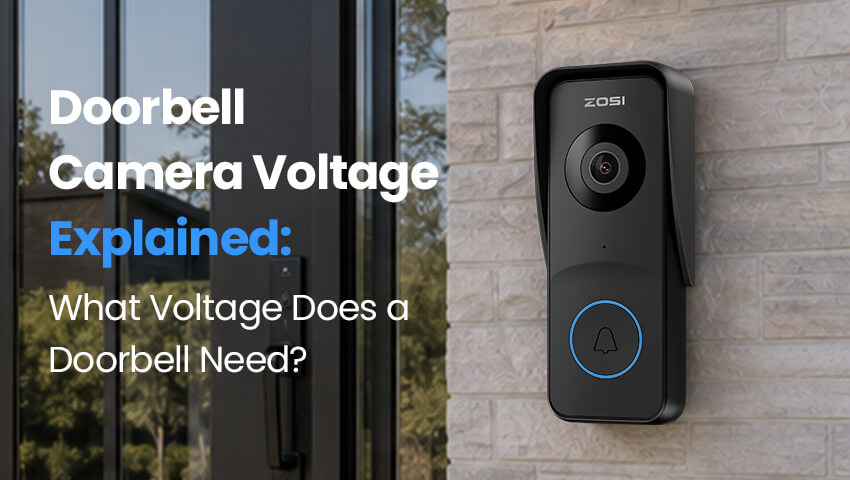
With the rapid growth of smart home technology, doorbell cameras have become one of the most popular devices for improving home security. Unlike traditional doorbells that only notify homeowners when someone presses a button, modern doorbell cameras provide video monitoring, motion detection, two-way audio, night vision, and remote access through smartphones. However, before installing a doorbell camera, one important question often comes up: What voltage does a doorbell camera need?
Understanding doorbell camera voltage is essential because using the wrong power source can cause installation problems, poor performance, or even damage to the device. Whether you are replacing an old wired doorbell, installing a smart video doorbell, or choosing between wired and battery-powered options, knowing the correct voltage requirements will help ensure reliable operation.
In this guide, we will explain common doorbell camera voltages, how power systems work, how to check your existing setup, and what you should consider before installation.
Contents
What Voltage Does a Doorbell Camera Need?
Most wired doorbell cameras typically require low-voltage power, usually between 12V and 24V AC (alternating current). Among these options, 16V AC and 24V AC are the most common voltages used by modern smart doorbell cameras.
Traditional doorbells have used low-voltage transformers for decades. These transformers reduce the standard household electrical supply, usually 120V in North America, to a safer voltage level suitable for doorbell systems.
For many smart doorbell cameras, the recommended voltage range is:
· 12V AC: Common in some older doorbell systems
· 16V AC: A widely used standard for many wired doorbell cameras
· 24V AC: Often preferred for newer smart doorbell devices because it provides more power for advanced features
It is important to check the manufacturer’s specifications before installation because different doorbell camera models have different power requirements.
Why Do Doorbell Cameras Use Low Voltage?
Unlike appliances such as refrigerators or televisions, doorbell cameras do not require a large amount of electricity. Their main components include a camera sensor, processor, Wi-Fi module, microphone, speaker, and motion detection system. These parts are designed to operate efficiently with low-voltage power.
Using low voltage offers several advantages:
1. Improved Safety
Low-voltage systems are safer for homeowners during installation and maintenance. Since the power level is significantly lower than standard household electricity, the risk of electrical shock is reduced.
2. Smaller Components
Doorbell cameras need compact designs that fit near the front door. Low-voltage systems allow manufacturers to create smaller transformers and wiring solutions.
3. Energy Efficiency
A doorbell camera usually operates continuously but consumes relatively little energy. A properly installed low-voltage system can provide reliable power without significantly increasing electricity costs.
AC vs. DC Power: What Is the Difference?
When choosing or installing a doorbell camera, it is important to understand the difference between AC and DC power.
· AC (Alternating Current) changes direction periodically and is the traditional power type used by most wired doorbell systems. Many doorbell transformers provide AC output, such as 16V AC or 24V AC.
· DC (Direct Current) provides electricity in a constant direction and is commonly used by battery-powered electronics. Some smart doorbell cameras use internal batteries or require a DC adapter.
Most wired doorbell cameras are designed specifically for AC power because they are intended to connect directly to existing doorbell wiring. Using an incompatible power source may prevent the camera from working correctly.
How to Check Your Existing Doorbell Voltage
Before installing a new doorbell camera, it is important to check whether your current doorbell system provides enough power.
Step 1: Locate the Doorbell Transformer
The transformer is usually installed near:
·Electrical panels
·Garages
·Basements
·Utility rooms
·Near the existing doorbell chime
It converts household voltage into low voltage for your doorbell.
Step 2: Check the Transformer Label
Most transformers have a label showing the output voltage. Look for numbers such as:
· 12V
· 16V
· 18V
· 24V
If your transformer does not provide enough voltage, you may need to replace it with a compatible model.
Step 3: Use a Multimeter for Accurate Testing
A multimeter can measure the actual voltage coming from your doorbell wires. This is useful because an old transformer may not provide its original rated voltage due to aging or wiring issues.
Always turn off power when handling electrical components and follow proper safety procedures.
What Happens If the Voltage Is Too Low?
If a doorbell camera does not receive enough power, several problems may occur.
· Camera Offline Issues
A low-power supply may cause the camera to disconnect frequently from Wi-Fi or restart unexpectedly.
· Poor Video Performance
Advanced features such as high-resolution video recording, infrared night vision, motion detection, and real-time alerts require stable power. Insufficient voltage may affect performance.
· Doorbell Chime Problems
Some smart doorbell cameras require enough power to operate both the camera and the existing indoor chime. If the voltage is too low, the chime may not work properly.
· Battery Drain
For certain models that support wired charging, insufficient voltage can prevent the battery from charging efficiently.
What Happens If the Voltage Is Too High?
While low voltage is a common issue, excessive voltage can also create problems.
Providing more voltage than the device supports may cause overheating, damage internal components, or shorten the lifespan of the doorbell camera.
For example, if a doorbell camera is designed for 16–24V AC, connecting it to an unsuitable high-voltage power source can permanently damage the device.
Always follow the manufacturer’s recommended voltage range.
Wired vs. Battery-Powered Doorbell Cameras
When selecting a doorbell camera, homeowners usually choose between wired and battery-powered options.
1. Wired Doorbell Cameras
Wired models connect directly to your home’s existing doorbell wiring.
Advantages include:
· Continuous power supply
· No need for frequent charging
· Better support for advanced features
· Reliable 24/7 monitoring
However, installation may require checking your existing transformer and wiring.
2. Battery-Powered Doorbell Cameras
Battery-powered models are easier to install because they do not require existing doorbell wiring.
Advantages include:
· Simple installation
· Flexible placement
· Suitable for homes without existing doorbell wiring
The disadvantage is that batteries need to be recharged periodically, especially when features such as motion detection and video recording are frequently used.
Do Smart Doorbell Cameras Need More Power Than Traditional Doorbells?
Yes, in most cases.
Traditional doorbells only need enough power to activate a chime when someone presses the button. Smart doorbell cameras, however, continuously operate sensors, processors, cameras, and wireless communication systems.
Features that increase power consumption include:
· 2K or higher-resolution video recording
· Color night vision
· Motion detection
· Artificial intelligence detection
· Two-way communication
· Cloud recording
Because of these additional functions, smart doorbell cameras often require a more stable power supply than traditional doorbells.
Tips for a Successful Doorbell Camera Installation
To ensure your doorbell camera works properly, consider these tips:
1. Confirm Voltage Compatibility
Always check the camera’s voltage requirements before connecting it to existing wiring.
2. Upgrade an Old Transformer if Needed
Older homes may have outdated transformers that cannot provide enough power for modern smart doorbells.
3. Check Your Wiring Condition
Damaged or loose wiring can cause unstable power delivery and connection problems.
4. Consider Professional Installation
If you are unsure about electrical wiring, hiring a professional installer can help prevent installation mistakes.
5. Choose the Right Doorbell Camera Type
Consider your home’s wiring situation, security needs, and desired features before choosing between wired and battery-powered models.
Conclusion
Understanding doorbell camera voltage is an important step before installing a smart home security device. Most wired doorbell cameras operate using low-voltage power, commonly between 12V and 24V AC, with 16V and 24V AC being popular choices for modern systems.
A correct and stable power supply ensures that your doorbell camera can provide reliable video monitoring, motion detection, night vision, and smart features without interruptions. Before installation, always check your existing transformer, confirm voltage compatibility, and follow the manufacturer’s recommendations.
Whether you choose a wired doorbell camera for continuous protection or a battery-powered model for easier installation, knowing the basics of voltage will help you create a safer and more reliable home security system.