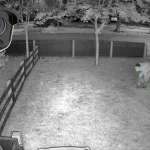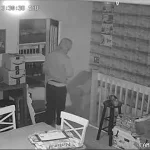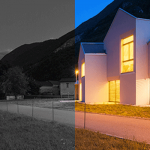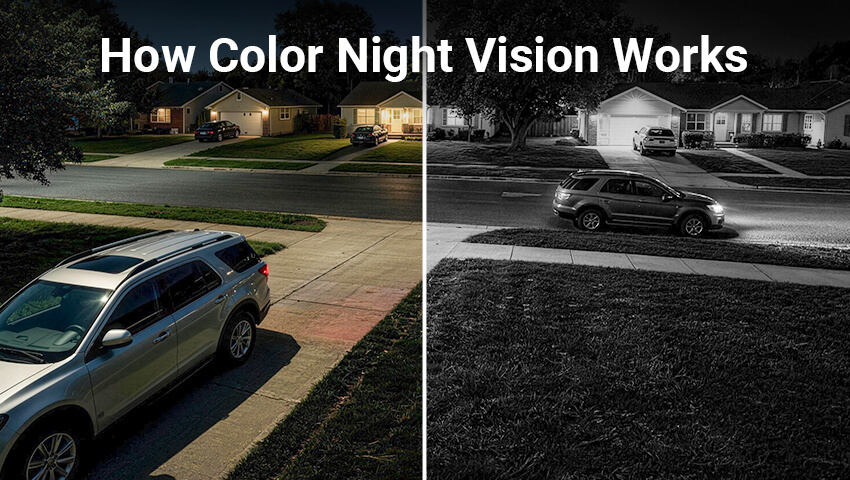
Night surveillance has always been one of the biggest challenges in imaging technology. Traditional security cameras rely on infrared light, producing black-and-white footage that often lacks critical detail.
Today, advanced imaging systems have changed this completely. Color night vision allows modern cameras to capture vivid, recognizable images even in extremely low-light environments.
Instead of simply “illuminating the dark,” modern systems reconstruct usable visual information using a combination of optics, sensors, and AI-based image processing.
Contents
The Core Problem: What Happens When Light Disappears?
To understand color night vision, we need to understand what breaks down at night.
A camera fundamentally depends on photons (light particles) hitting its sensor. When light decreases:
1. Photon starvation
Very few photons reach the sensor
Signal becomes weak and inconsistent
Noise becomes more dominant than image detail
2. Loss of color information
Color is not directly “seen”—it is calculated from:
Red channel
Green channel
Blue channel
At night:
Each channel receives insufficient data
Color separation becomes unreliable
The system defaults to grayscale for clarity
3. Why IR mode becomes necessary
Infrared light:
Provides illumination invisible to humans
Reflects strongly from objects
But contains no color wavelength information
Result: clear shapes, but no color.
How Color Night Vision Actually Works (End-to-End Process)
Color night vision is not a single feature—it is a multi-stage imaging pipeline that reconstructs usable color information from extremely weak light signals.
1. Capturing More Light: Optics + Sensor Design
Everything starts with maximizing how much light enters and gets captured.
Key hardware components include:
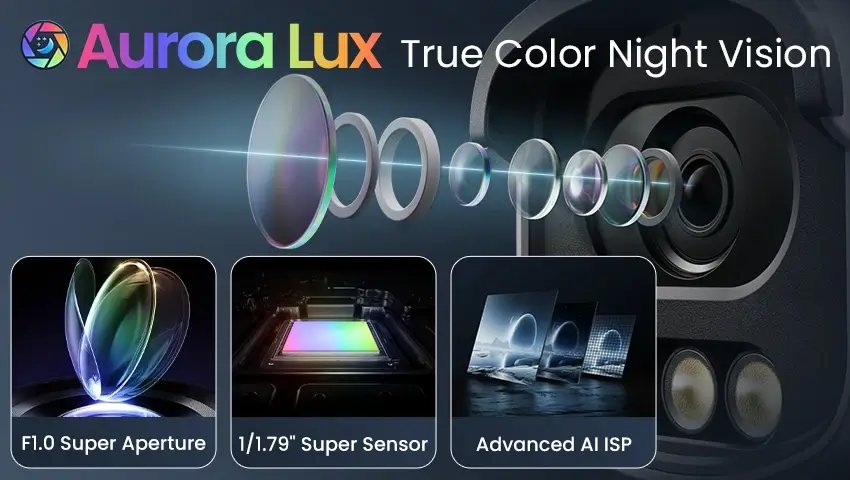
Large aperture lenses (e.g., f/1.0–f/1.6): allow more light to enter the camera
High-sensitivity CMOS sensors: designed to detect very weak light signals
Large pixel architecture: each pixel collects more photons, improving clarity
Some sensors also use back-illuminated (BSI) structures, which improve light efficiency by reducing internal obstructions.
Together, these hardware improvements ensure the camera collects the maximum possible visual information before processing begins.
2. Turning Light Into Usable Signals: Sensor Amplification & Noise Control
Once light is captured, the sensor converts it into electrical signals. But in low light, these signals are extremely weak.
To compensate, cameras apply amplification:
Analog gain (hardware-level boost)
Digital gain (software-level enhancement)
However, amplification introduces noise, which can make images grainy or distorted.
This is where modern processing becomes essential.
3. AI Image Processing: Rebuilding Clarity and Color
This is the “brain” of modern color night vision systems.
Advanced AI image signal processing performs several critical tasks in real time:
Noise reduction: removes random grain while preserving edges
Dynamic range optimization: balances bright and dark areas in the same scene
Detail enhancement: restores outlines and fine structures
Color reconstruction: estimates missing color information based on learned patterns
Instead of simply brightening the image, AI reconstructs a visually meaningful version of the scene using both physics-based rules and trained visual models.
4. Optical Switching: IR-Cut Filter and Night Mode Behavior
Security cameras also include an IR-cut filter that controls how light is interpreted.
Daytime: IR-cut filter is active → ensures accurate natural colors
Nighttime: filter is removed → increases sensitivity to low light and infrared
This switching allows the camera to adapt seamlessly between environments without manual adjustment.
Types of Color Night Vision
Different systems use different strategies to achieve color imaging at night:
Ambient Light-Based Color Vision
Uses natural light sources such as streetlights or moonlight.
Best for urban environments where minimal lighting exists.
Spotlight or White-Light Assisted Vision
Uses built-in LEDs to illuminate the scene.
Produces the most accurate and stable full-color image.
AI Low-Light (Starlight) Vision
Relies mainly on ultra-sensitive sensors and AI enhancement.
Can produce color images with very limited lighting, without strong artificial illumination.
Benefits of Color Night Vision for Home Security
Color night vision is more than a visual enhancement—it fundamentally improves how nighttime footage is interpreted, analyzed, and used in real security scenarios.
Better Identification of People and Objects
Color information provides critical visual details that are often lost in black-and-white footage. Clothing color, vehicle appearance, and small distinguishing features become much easier to recognize. This improves accuracy when identifying subjects or describing events after they occur.
Clearer Understanding of the Scene
With color restored, nighttime environments become more natural and easier to interpret. Objects stand out more clearly from their surroundings, helping users understand spatial relationships, movement direction, and the overall context of a situation.
Faster and More Confident Decision-Making
Color helps the human brain process visual information more efficiently than grayscale images. This allows users to quickly distinguish normal activity from unusual behavior, especially when monitoring live video feeds or reviewing alerts.
Higher-Quality Evidence for Review and Reporting
Color footage provides richer detail for post-incident analysis. Subtle differences in appearance, lighting, and surroundings can support more accurate reconstructions of events and improve communication with authorities when needed.
Improved Nighttime Monitoring Experience
For everyday users, color night vision makes live viewing more intuitive. Instead of interpreting vague shapes or shadows, users can immediately understand what they are seeing, reducing uncertainty during nighttime monitoring.
Best Security Cameras with Color Night Vision in 2026
To bring color night vision technology into real-world applications, modern security cameras combine advanced optics, AI processing, and smart lighting design. In 2026, ZOSI offers a range of cameras that apply these technologies across different use scenarios—from indoor monitoring to full outdoor surveillance systems.
Below are three standout models that demonstrate how color night vision is implemented in practical security solutions.
C680 3MP Window Camera – Color Night Vision for Outdoor Monitoring from Indoors
The ZOSI C680 3MP Window Camera is designed for users who want to monitor outdoor areas without installing a camera outside. Mounted on the inside of a window, it captures clear views of driveways, front doors, porches, or yards while staying protected from weather and tampering.
Its large f/1.0 aperture captures significantly more light than conventional lenses, helping produce brighter, more detailed images after dark. Combined with color night vision, glare-reduction technology, and AI person and vehicle detection, the C680 provides reliable outdoor monitoring through glass, day and night.
It features:
3MP Super HD resolution
Large f/1.0 aperture for enhanced low-light performance
Color night vision with glare-reduction technology
Indoor window-mounted design for outdoor surveillance
Dual-band WiFi (2.4 GHz & 5 GHz)
AI person and vehicle detection
C298 8MP PTZ WiFi Outdoor Camera – Wide-Angle Full Coverage in Color
C298 8MP PTZ WiFi Outdoor Camera represents a more advanced outdoor solution combining PTZ control and dual-lens imaging.
Key highlights include:
8MP ultra-high-definition resolution for sharper detail capture
Pan-tilt-zoom (PTZ) control for 360° flexible monitoring
Dual-lens system for both wide view and close-up detail
Full-color night vision supported by AI-enhanced low-light processing
Smart motion detection with tracking capabilities
This model is built for large-area surveillance, such as gardens, driveways, and building perimeters. Its PTZ function allows users to actively track movement while maintaining color clarity in low-light environments.
C186 4K PoE Security Camera System – Professional-Grade Full Color Night Vision
C186 4K PoE Security Camera System is a professional wired security solution designed for continuous 24/7 monitoring.
It offers:
4K ultra HD resolution for maximum detail accuracy
PoE (Power over Ethernet) stable wired connection
Built-in AI ISP for real-time image enhancement
Full-color night vision using large aperture and smart illumination
Continuous recording with local storage support
Unlike WiFi-based systems, this PoE setup ensures stable transmission and uninterrupted surveillance, making it suitable for villas, offices, warehouses, and high-security environments.
FAQs
How do security cameras show color at night?
They combine high-sensitivity sensors, large aperture lenses, and AI image processing to collect and reconstruct weak light signals into color images. Some systems also use built-in white lights for illumination.
Is color night vision better than infrared night vision?
Color night vision provides more detail and context, making it easier to identify people, objects, and vehicles. Infrared is still useful in complete darkness, but it lacks color information.
Does color night vision work in total darkness?
Not fully. Most color night vision systems require at least minimal ambient light or built-in illumination to produce accurate color images.
Do all ZOSI cameras support color night vision?
Not all models, but many modern cameras from ZOSI include advanced color night vision using AI ISP, low-light sensors, or spotlight-assisted imaging.
Conclusion
Color night vision represents a major leap in imaging technology. By combining optics, sensor engineering, and AI-driven processing, modern cameras can now reconstruct detailed, color-rich scenes even in low-light environments.
As technology continues to evolve, the gap between day and night visibility continues to shrink—bringing truly intelligent 24/7 surveillance closer to reality.
Related Posts