
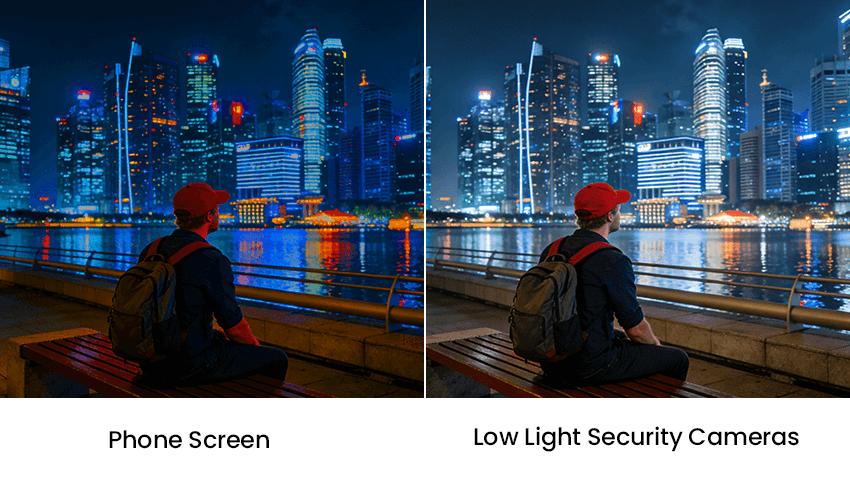
Security does not stop when the sun goes down. In fact, many incidents such as theft, vandalism, and trespassing are more likely to occur at night or in poorly lit environments. This makes low light performance one of the most critical factors when choosing a surveillance camera. A camera that delivers clear, detailed footage in low light conditions can make the difference between identifying a suspect and missing crucial evidence.
With advancements in imaging sensors, night vision technology, and AI-powered enhancements, modern security cameras are far more capable in low light than ever before. However, not all low light cameras are created equal. Some rely on infrared black-and-white night vision, while others provide full-color video even in near darkness.
In this article, we will explore what defines the best low light security camera, the key technologies behind superior nighttime performance, and how to choose the right camera based on your surveillance needs.
Contents
Why Low Light Performance Matters in Security Cameras
Low light performance refers to a camera’s ability to capture clear images in dim or dark environments. Poor low light capability often results in grainy footage, motion blur, loss of detail, or complete darkness in recordings.
For surveillance purposes, low light clarity is essential for:
– Identifying faces and license plates at night
– Monitoring outdoor areas such as yards, parking lots, and entrances
– Recording evidence that can be used for investigations
– Reducing false alarms caused by unclear motion detection
A camera with strong low light performance ensures continuous protection, regardless of lighting conditions.
Key Technologies Behind the Best Low Light Cameras
1. Image Sensor Size and Quality
The image sensor is the heart of any camera. Larger sensors can capture more light, resulting in brighter and clearer images in dark environments. Cameras with advanced CMOS sensors typically outperform older sensor designs in low light conditions.
High-quality sensors reduce digital noise and preserve details such as facial features and object outlines, even in near darkness.
2. Infrared Night Vision
Infrared (IR) night vision is one of the most common low light solutions in security cameras. These cameras use infrared LEDs to illuminate the scene, allowing the camera to record in complete darkness.
Key advantages of IR night vision include:
– Reliable performance in total darkness
– Longer viewing distance at night
– Lower power consumption
However, IR night vision usually produces black-and-white footage, which may limit the ability to identify colors such as clothing or vehicles.
3. Full-Color Night Vision
Full-color night vision cameras use advanced sensors combined with large-aperture lenses and sometimes built-in spotlights to capture color footage in low light.
Benefits of full-color night vision include:
– Better identification of people and objects
– Clearer contextual details
– More useful evidence for law enforcement
These cameras perform best in low light environments where there is at least minimal ambient light, such as streetlights or porch lights.
4. Wide Aperture Lenses
A lens with a wide aperture (low f-number) allows more light to reach the sensor. This improves brightness and reduces motion blur in nighttime recordings.
Wide aperture lenses are particularly useful for monitoring fast-moving objects at night, such as vehicles or people walking quickly.
5. AI Image Enhancement and Noise Reduction
Modern security cameras often use AI-powered algorithms to enhance low light footage. These technologies analyze each frame in real time to:
– Reduce digital noise
– Improve contrast and sharpness
– Enhance facial and object recognition
AI-based enhancement can significantly improve image clarity without requiring additional lighting.
Types of Low Light Security Cameras
Indoor Low Light Cameras
Indoor cameras are typically used in hallways, living spaces, offices, and warehouses. They often rely on infrared night vision or low-light sensors to operate in dark rooms.
Key considerations:
– Quiet IR operation without visible red lights
– Clear close-range night vision
– Compact design for discreet monitoring
Outdoor Low Light Cameras
Outdoor cameras face additional challenges such as weather, long viewing distances, and uneven lighting. The best outdoor low light cameras offer:
– Strong infrared illumination
– Weatherproof housing
– Wide-angle lenses
– Full-color night vision for enhanced detail
These cameras are ideal for entrances, driveways, and perimeter security.
Wired vs Wireless Low Light Cameras
Wired cameras generally provide more stable performance and stronger night vision due to consistent power supply. Wireless cameras offer easier installation but may rely on battery-saving modes that limit night performance.
For critical low light surveillance, wired or solar-powered options are often more reliable.
Key Features to Look for in a Low Light Security Camera
When choosing the best low light camera, consider the following features:
– Low Lux Rating: A lower lux rating indicates better performance in darker conditions.
– Night Vision Range: Longer IR range ensures better coverage for outdoor areas.
– Resolution: Higher resolution helps preserve detail in low light footage.
– Smart Motion Detection: AI-based detection reduces false alerts at night.
– Storage Options: Local storage ensures footage is not lost due to connectivity issues.
– App and Remote Access: Easy access to nighttime footage via mobile devices is essential.
Common Mistakes When Choosing a Low Light Camera
Many users make the mistake of focusing only on daytime video quality. A camera that performs well during the day may struggle at night if it lacks proper low light technology.
Other common mistakes include:
– Ignoring sensor size and aperture specifications
– Choosing cameras with weak infrared LEDs
– Overlooking environmental lighting conditions
– Assuming all night vision cameras perform the same
Understanding your specific surveillance environment is key to avoiding these pitfalls.
How to Optimize Low Light Camera Performance
Even the best low light camera can benefit from proper setup. Here are a few tips to maximize performance:
– Position cameras away from reflective surfaces to avoid IR glare
– Add minimal ambient lighting where possible
– Keep lenses clean to prevent image distortion
– Regularly update firmware for improved AI performance
Proper installation can significantly enhance nighttime clarity.
Conclusion
Choosing the best low light security camera is essential for effective 24/7 surveillance. Whether you rely on infrared night vision, full-color low light technology, or AI-enhanced imaging, the right camera can provide clear, reliable footage when it matters most.
By understanding key technologies such as sensor quality, infrared illumination, wide aperture lenses, and AI enhancement, you can make an informed decision tailored to your security needs. Low light performance should never be an afterthought. It is a core feature that directly impacts safety, evidence quality, and peace of mind.
Investing in a high-quality low light surveillance camera ensures that your property remains protected not only during the day, but also throughout the darkest hours of the night.
Related Posts
 Why Choose a 16MP Security Camera: The Next Level of Clarity and Protection
  what is 4k resolution? Introduction
  The Comfort of Warm Light vs. The Clarity of Cool Light: A Comprehensive Guide
  In-depth Analysis of IP67 Protection Rating Cameras: The Technical Foundation of Reliable Outdoor Monitoring
  Top Farm Security Camera Systems for 24/7 Protection