Contents
Introduction
Modern farming operations face a variety of security and management challenges. Farms often cover large areas, contain valuable equipment, store crops and livestock, and may not always have staff present at all times. As a result, protecting farm property from theft, trespassing, and unexpected incidents has become increasingly important. Security cameras have become a practical and cost-effective solution for farmers who want to monitor their land, improve safety, and gain peace of mind.
By installing the right surveillance system, farmers can keep an eye on livestock, monitor equipment storage areas, track farm activity, and even detect potential problems before they become serious. However, using security cameras effectively on farms requires more than simply installing a few devices. Proper placement, reliable connectivity, and thoughtful planning are essential to get the most value from a surveillance system. The following tips will help farmers use security cameras more efficiently and make their farms safer and easier to manage.
1. Identify Key Areas That Need Monitoring
Before installing security cameras, it is important to determine which areas of the farm require the most attention. Farms are usually large, so trying to cover every corner is often unnecessary and impractical.
Start by focusing on high-value or high-risk locations such as:
– Equipment storage sheds and barns
– Livestock areas
– Entry gates and driveways
– Crop storage facilities
– Fuel tanks and machinery parking areas
Monitoring these key locations can significantly reduce the risk of theft and vandalism. Cameras placed at entry points can also help record vehicles and visitors entering the property.
2. Choose Weather-Resistant Cameras
Farms are exposed to harsh environmental conditions such as rain, dust, wind, and extreme temperatures. Therefore, it is essential to choose security cameras designed for outdoor use.
Look for cameras that are built to withstand rain, dirt, and changing weather conditions. Durable camera housings and sealed components help ensure the system continues working reliably throughout the year.
In addition, cameras with night vision capabilities are particularly important for farms, since many security incidents occur after dark. Infrared night vision allows cameras to capture clear footage even in low-light or dark environments.
3. Ensure Wide Coverage with Strategic Placement
Proper camera placement is one of the most important factors in building an effective farm surveillance system. Because farms typically cover large open spaces, cameras should be positioned to maximize visibility.
Some placement tips include:
– Install cameras at elevated positions such as poles or building corners
– Aim cameras toward entry points and main activity areas
– Avoid placing cameras directly facing the sun to reduce glare
– Use wide-angle lenses for larger fields or yards
In certain cases, using a few well-positioned cameras can provide better coverage than installing many poorly placed ones.
4. Use Wireless or Solar-Powered Cameras in Remote Areas
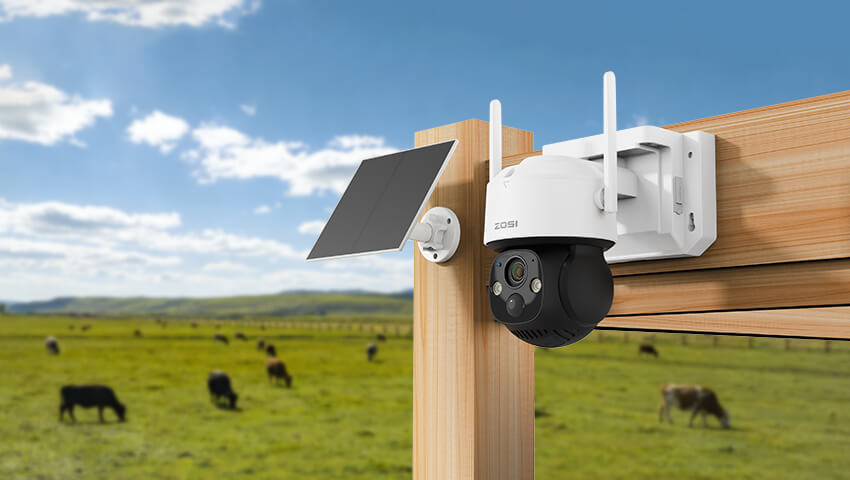
Many parts of a farm may not have easy access to electrical power or network cables. For these locations, wireless or solar-powered security cameras can be extremely useful.
Solar cameras are especially popular for remote gates, fields, or pasture areas. They operate using solar panels and rechargeable batteries, allowing them to function without traditional wiring. Wireless connectivity also makes installation faster and more flexible.
These solutions allow farmers to expand their surveillance coverage even in areas that are far from buildings or power sources.
5. Enable Motion Detection and Alerts
Modern security cameras often include smart features such as motion detection and real-time alerts. These features are particularly valuable on farms where continuous monitoring is difficult.
When motion detection is enabled, the camera will begin recording when movement is detected. At the same time, the system can send instant alerts to the farmer’s smartphone or computer. This allows farmers to respond quickly if suspicious activity occurs.
For example, motion alerts can notify a farmer if someone enters a restricted area late at night or if animals escape from a fenced area.
6. Monitor Livestock and Farm Operations
Security cameras are not only useful for preventing crime—they can also help farmers manage daily operations more efficiently.
Many farmers install cameras in barns or livestock pens to observe animals remotely. This can be particularly helpful during calving or lambing seasons when animals may require close monitoring.
Similarly, cameras placed near feeding stations, water supplies, or equipment areas can help farmers ensure that everything is functioning properly without needing to physically inspect every location.
Remote viewing through mobile apps makes it possible to check farm conditions anytime and from anywhere.
7. Maintain and Check the System Regularly
Installing security cameras is only the first step. Regular maintenance is necessary to ensure the system continues to work effectively.
Farmers should periodically:
– Clean camera lenses to remove dust or mud
– Check that cameras are still properly aligned
– Verify that recordings are being stored correctly
– Test motion detection and alert functions
Routine maintenance helps prevent technical issues and ensures that the cameras capture clear and usable footage when needed.
Conclusion
Security cameras have become an essential tool for modern farm management. They provide an effective way to protect valuable assets, monitor livestock, and keep track of daily farm activities. By carefully selecting durable cameras, placing them strategically, and using smart features like motion detection and remote access, farmers can significantly improve both security and efficiency on their farms.
Although farms present unique challenges due to their size and outdoor environment, the right surveillance system can offer reliable protection and valuable insights. With thoughtful planning and regular maintenance, security cameras can become a powerful asset that helps farmers safeguard their property and manage their operations with greater confidence.