
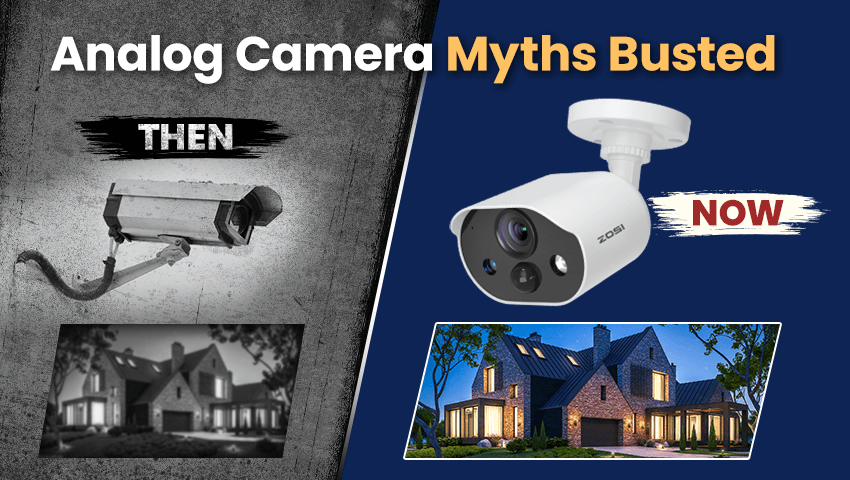
When people talk about security cameras, the conversation often centers around IP cameras, WiFi connectivity, and cloud-based features. In comparison, analog camera systems are sometimes dismissed as outdated or irrelevant. But this perception is largely based on old assumptions rather than modern reality.
In fact, today’s modern analog camera systems have evolved into powerful, reliable, and highly practical security solutions. They continue to protect millions of homes and businesses worldwide—and for good reason. In this comprehensive guide, we’ll bust the most common myths about analog cameras and explain why they remain a smart choice for many users.
Contents
Myth 1: Analog Cameras Are Outdated Technology
The truth: Analog technology has grown far beyond its early limitations.
Years ago, analog cameras were associated with low resolution and basic functionality. Modern analog systems, however, support **HD, 2K, and even 4K resolution** through advanced HD-over-coax technologies. This allows high-definition video transmission over traditional coaxial cables without sacrificing stability.
Rather than being obsolete, analog systems represent a mature and refined technology—one that prioritizes reliability and consistency over constant change.
Myth 2: Analog Cameras Can’t Deliver Clear or Detailed Images
The truth: Image quality is no longer a weak point.
Thanks to improved sensors, better image processing, and enhanced DVR capabilities, modern analog cameras can capture clear, detailed footage suitable for real-world security needs. This includes:
* Monitoring entry points like doors and windows
* Keeping an eye on driveways and parking areas
* Reviewing incidents with clear visual evidence
Daytime images are crisp, while night vision performance has also improved significantly, offering dependable visibility after dark.
Myth 3: Analog Systems Need Internet Access to Function
The truth: Analog systems are designed to work independently.
One of the defining advantages of an analog camera system is its ability to operate without an internet connection. Cameras record continuously to a DVR with local storage, ensuring uninterrupted monitoring even if the network goes down.
Internet access is optional and mainly used for remote viewing. This makes analog systems especially suitable for:
* Locations with unstable internet
* Rural or off-grid properties
* Users who prioritize uninterrupted recording
Myth 4: Analog Cameras Are Less Secure Than IP Systems
The truth: Local storage offers strong privacy advantages.
Analog camera systems store footage locally on a DVR rather than uploading it to the cloud. This means:
* No mandatory subscriptions
* No reliance on third-party servers
* Greater control over who can access recorded data
For users concerned about privacy, data ownership, or long-term costs, analog systems provide a **secure and transparent approach** to video storage.
Myth 5: Analog Camera Systems Are Difficult to Install
The truth: Analog systems are among the simplest to set up.
Installation is straightforward and intuitive:
1. Connect cameras to the DVR using coaxial cables
2. Power on the system
3. Begin recording immediately
There’s no need to configure IP addresses, connect to WiFi, or troubleshoot network issues. This plug-and-play simplicity makes analog systems ideal for DIY users, first-time camera owners, and anyone who prefers technology that works without constant adjustments.
Myth 6: Analog Cameras Are Only Suitable for Small or Older Properties
The truth: Analog systems scale extremely well.
Analog cameras are commonly used in a wide range of environments, including:
* Homes and apartment buildings
* Retail stores and offices
* Warehouses, factories, and farms
* Garages and large outdoor properties
Because coaxial cables can run long distances without signal loss, analog systems are particularly effective in large spaces where WiFi coverage may be limited or unreliable.
Myth 7: Analog Cameras Lack Modern Features
The truth: Analog systems focus on what matters most.
While analog systems may not emphasize cloud-based AI or app-heavy ecosystems, they excel at delivering:
* Stable 24/7 recording
* Low-latency live viewing
* Reliable night vision
* Long-term durability
For many users, dependable performance is more valuable than advanced features that add complexity without improving core security.
Analog vs IP vs WiFi: Choosing the Right System
Security isn’t about choosing the newest technology—it’s about choosing the **right tool for your needs**.
Why Analog Cameras Remain a Smart Investment
Analog camera systems are known for their durability and longevity. Once installed, they require minimal maintenance and are less affected by network changes, firmware updates, or compatibility issues.
For businesses and homeowners looking for a long-term, cost-effective security solution, analog systems continue to deliver excellent value.
FAQs
1. Are analog cameras still worth buying today?
Yes. Modern analog cameras offer high-definition video, stable performance, and reliable local recording. They are especially worth considering if you want a simple, dependable system without monthly fees.
2. Can analog cameras work without the internet?
Absolutely. Analog cameras record directly to a DVR and function fully offline. Internet access is only required if you want remote viewing or mobile app access.
3. Can I upgrade my existing analog system?
In many cases, yes. Modern analog cameras and DVRs are often backward-compatible with existing coaxial cabling, making upgrades easier and more cost-effective.
4. What’s the biggest advantage of an analog camera system?
Reliability. Analog systems deliver consistent recording, simple installation, and long-term stability without relying heavily on internet connectivity or complex configurations.
Conclusion: Rethinking Analog Security
Many myths about analog cameras stem from outdated information. Today’s analog systems are:
* Clearer than ever before
* Independent from internet reliability
* Easy to install and maintain
* Cost-effective with no ongoing fees
For users who want security that simply works—day after day, year after year—analog camera systems remain a powerful and practical choice.
Related Posts
 Analog vs IP Cameras: Choosing the Right System
  What Is a PoE Camera? PoE vs WiFi Camera: Which Security Camera Is Right for You?
  How to Tell If Your Security Camera Has Been Hacked
  Understanding PoE Pinout: The Backbone of Modern Security Camera Systems
  Motion Sensor Camera with Night Vision: The Best Choice for Smart Home Security