
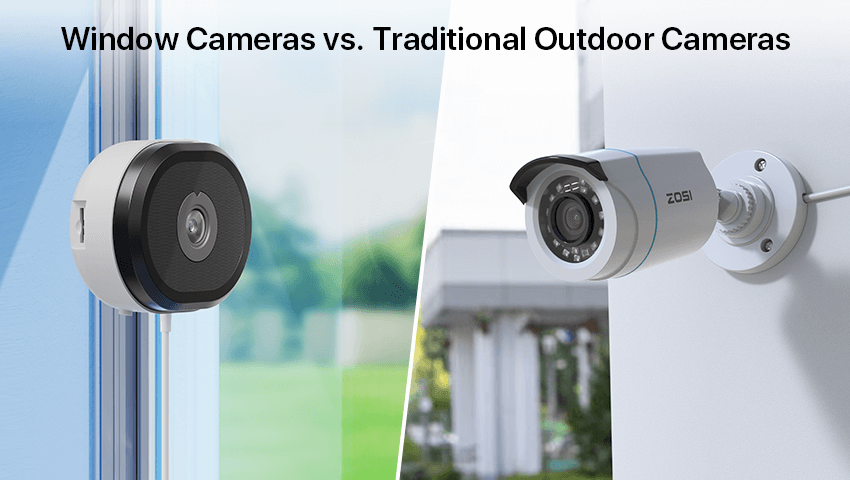
Home security cameras are no longer “one size fits all.” Today, homeowners and renters can choose between many styles, including two that often get compared: window cameras and traditional outdoor cameras.
Both help you monitor what’s happening outside, but they work in very different ways and offer different advantages. Understanding those differences makes it much easier to choose the setup that truly fits your home, your budget, and your installation limits.
What Is a Window Camera?
A window camera is a security camera that’s placed inside your home, facing outward through a window to monitor outdoor areas. Instead of mounting the device on an exterior wall or under an eave, you simply attach it to the glass or place it against the window.
It’s designed for situations where:
• You can’t or don’t want to install equipment outside
• You prefer an indoor-only setup
• You want simple, no-drill installation
The result is “inside-to-outside” monitoring: you see what’s happening outside while the camera itself stays safely indoors.
What Is a Traditional Outdoor Camera?
A traditional outdoor camera is built specifically for exterior installation. It’s mounted outside—on walls, ceilings, poles, fences, or under eaves—and engineered to work in the open air.
Typical traits of outdoor cameras include:
• Weatherproof housings to handle rain, snow, dust, heat, and cold
• Flexible mounting angles for driveways, backyards, and entrances
• Strong night vision (infrared or full-color) without shooting through glass
• Clear, unobstructed view of the outside environment
Because they sit directly in the environment they monitor, outdoor cameras are ideal for full perimeter protection and wide-area coverage.
Contents
Key Differences Between Window and Outdoor Cameras
Although both types can watch the outside, their design leads to some important differences:
• Placement & installation
Window cameras: placed indoors behind glass; no drilling.
Outdoor cameras: mounted outside with screws and brackets.
• Exposure to weather
Window cameras: protected by being indoors.
Outdoor cameras: purpose-built to withstand weather and temperature changes.
• Image & night vision performance
Window cameras: may need special low-light handling to avoid reflections on glass.
Outdoor cameras: no glass in front of the lens, so night vision is typically stronger and cleaner.
• Detection accuracy
Window cameras: AI may be slightly affected by glass, glare, or double panes.
Outdoor cameras: detect motion, people, and vehicles directly in the open, so accuracy is often higher.
• Coverage
Window cameras: limited to views available from windows.
Outdoor cameras: can be positioned almost anywhere outside for broader coverage.
With that context in mind, it’s easier to look at what each type of camera does best.
Advantages of Window Cameras
1. No-Drill, No-Hassle Installation
Window cameras are designed for quick, DIY setup. You place them on a windowsill or attach them to the glass—no tools, no holes, no cable routing through walls. This is ideal for:
• Renters
• Apartments and condos
• Homes with HOA or landlord restrictions
2. Naturally Weather-Protected
Because the camera lives indoors, it’s protected from:
• Rain and snow
• Dust and insects
• Direct sun and temperature extremes
That means less wear and tear and fewer weather-related issues.
3. Discreet and Less Noticeable
A window camera blends into your interior. From outside, it’s often harder to spot than a traditional outdoor camera. This is helpful if you:
• Prefer a more subtle security presence
• Don’t want visitors or neighbors to feel like they’re “under surveillance”
4. Safer from Tampering
Since the device is indoors, it’s much more difficult for someone outside to reach or damage it.
5. Easy to Move and Reposition
If you want to change the viewing angle or move to another window, it only takes a moment. This is perfect for:
• Monitoring different areas at different times (e.g., street today, backyard tomorrow)
• People who move homes frequently
Advantages of Traditional Outdoor Cameras
1. Unobstructed View and Better Clarity
Outdoor cameras look directly at the scene, with no glass in front of the lens. That means:
• No reflections from room lights
• No glare from double-glazed windows
• No IR light bouncing back into the lens
This leads to sharper images and clearer night footage, especially at longer distances.
2. Stronger, Cleaner Night Vision
Because they can use IR LEDs or spotlights freely, outdoor cameras often deliver:
• Better performance in very dark environments
• Longer night vision range
• Clearer faces and vehicle details at night
3. Flexible Placement for Full Coverage
Mounted outside, these cameras can be placed where you most need them:
• Over the garage or driveway
• At the front door
• Overlooking side passages or backyards
This flexibility makes them ideal for whole-property monitoring.
4. Visible Deterrent
A clearly visible outdoor camera sends a simple message: this home is protected. That alone can deter some opportunistic intruders.
Which Should You Choose?
Choosing between a window camera and a traditional outdoor camera depends on your living situation, installation freedom, and how much coverage you need.
With that in mind, here’s how to think about your choice:
Choose a Window Camera if you:
• Want a no-drill, no-damage installation that can be set up in minutes
• Live in a rental, apartment, or condo where exterior mounting is restricted
• Prefer a camera that stays indoors, protected from weather and tampering
• Only need to monitor areas that are visible from your windows (street, driveway, yard, parking spot, entrance path)
• Like a discreet, low-profile security option that doesn’t stand out outside
• Want a cost-effective way to add outdoor viewing without installing full outdoor hardware
https://www.zositech.com/products/c680-3mp-window-camera-with-2-4ghz-5ghz-wifi-color-night-vision?variant=47735145431282
The ZOSI C680 is an indoor-mounted camera specifically designed for window use. It attaches to glass with a strong “magic tape” style mount, so you don’t need to drill or modify your walls. Equipped with Aurora Lux true color night vision, it captures vivid, full-color footage even in ultra-low light conditions, without any visible illumination, which means there’s no reflection on windows or glass. On top of that, it offers person and vehicle detection plus flexible local microSD or cloud storage, making it a practical example of what a modern window camera can do. A camera like the C680 is especially attractive for people who want smart features (AI detection, color night vision, dual-band Wi-Fi) without committing to permanent outdoor installation.
Choose Traditional Outdoor Cameras if you:
• Need wide-area coverage that goes beyond what your windows can see (e.g., side yard, back fence line, garage area)
• Want the clearest possible video and night vision without glass reflections
• Rely heavily on accurate person/vehicle detection and motion alerts in open outdoor spaces
• Want your cameras to serve as a visible deterrent to trespassers
• Don’t mind installing mounts, running cables, or doing a slightly more involved setup
• Are looking for a long-term, full-perimeter security solution around the outside of the home
Traditional outdoor cameras are the right choice when performance, coverage, and deterrence are your top priorities.
https://www.zositech.com/products/c296b-wi-fi-6-pan-tilt-security-camera?variant=47330370126066
For example: the ZOSI C296B Wi‑Fi 6 camera offers 355° pan and 140° tilt, which means it can rotate almost fully and look up and down far enough to cover a large area. It also supports person, vehicle, and pet detection, helping reduce false alarms by focusing on the most important kinds of motion. Because it uses Wi‑Fi 6, it has stronger, more stable wireless connectivity — perfect for homes where running network cable is difficult or impractical. And with up to 256 GB of local storage, you can store hours of footage without necessarily needing cloud backup.
Or Combine Both for Layered Security
You don’t have to choose only one type. In many homes, the best solution is a mix of both:
• Use a window camera like the ZOSI C680 for quick, easy monitoring through key windows—especially where drilling is not an option.
• Use traditional outdoor cameras to cover driveways, backyards, entrances, and other critical zones with maximum clarity and detection accuracy.
Together, they provide a layered approach: easy inside setup + powerful outside monitoring.
FAQs
1. Can a window camera like the ZOSI C680 work at night?
Yes! The ZOSI C680 features color night vision, allowing it to capture clear, detailed video even in low-light conditions. While window glass can sometimes reduce night vision quality, the C680 is designed to handle reflections and maintain bright, usable footage.
2. Do I need to drill or make permanent changes to install a window camera?
No. One of the main advantages of window cameras is easy, tool-free installation. The C680, for example, uses a “magic tape” mount, so you can place it on your windowsill or glass without drilling, screws, or modifications.
3. Should I use only window cameras, or combine them with outdoor cameras?
It depends on your coverage needs. Window cameras are ideal for monitoring specific areas visible from windows, but for full perimeter security, combining them with traditional outdoor cameras ensures better detection accuracy, wider coverage, and a visible deterrent to intruders.
Conclusion
Choosing between a window camera and a traditional outdoor camera ultimately depends on your home layout, security needs, and installation preferences. Window cameras, like the ZOSI C680, offer quick setup, indoor protection, and smart monitoring, while outdoor cameras provide broader coverage, stronger night vision, and visible deterrence.
Many homeowners find that combining both gives the best of both worlds—easy indoor monitoring plus full outdoor protection.
What about you? Do you prefer a simple indoor window camera, a robust outdoor setup, or a hybrid system? Share your thoughts and experiences in the comments below — we’d love to hear how you secure your home!
Related Posts
 Do Security Cameras Work through Glass or behind a Glass Window
  Outdoor Security Cameras for Home: Best Picks for 2024
  Laws on Outdoor Surveillance Cameras for Home: A Complete Guide
  8 Expert Strategies to Protect Outdoor Security Cameras
  In-depth Analysis of IP67 Protection Rating Cameras: The Technical Foundation of Reliable Outdoor Monitoring